Egypt Wants to Become Africa’s AI Hub

Welcome to Issue 009 of The Ecosystem Brief.
We’re back with another week of the latest developments shaping AI and technology across Africa.
From new AI infrastructure and funding to policy changes, emerging startups, major deals and the companies building around some of the continent’s biggest opportunities, we’re bringing you the updates and signals worth paying attention to.
Let’s get into Issue 009.

Egypt Deepens Its NVIDIA AI Partnership
Egypt’s Ministry of Communications and Information Technology is preparing an MoU with NVIDIA covering AI, advanced computing, digital skills and startup support. While the agreement has not yet been signed and no financial or hardware commitment has been disclosed, the proposed cooperation includes R&D, specialised training and support for entrepreneurs.
Why it matters: Egypt is positioning itself as a North African AI hub, while NVIDIA is building deeper relationships with the ecosystem. The next key question is what the eventual agreement means in practice for compute access, talent and startups.
22 On Sloane Launches an AI Platform for African Entrepreneurs
Johannesburg-based 22 On Sloane has launched KUMii.Africa, an AI-powered platform designed to match entrepreneurs with funders, markets, mentors and business resources. The platform can also generate business plans, pitch decks and financial models, while the group’s investment arm is pursuing a $63 million fundraise.
Why it matters: Africa’s funding and market-access ecosystem is fragmented, and KUMii is using AI to reduce the time and friction involved in finding the right opportunities. It’s a bet on AI as an ecosystem-matching layer, not simply a content-generation tool.
Ghana Pushes for More Connected AI Regulators
Ghana’s Data Protection Commission is calling for stronger collaboration among African regulators as AI and data become increasingly concentrated among global technology platforms. The push includes the NADPA draft Model Policy on Cross-Border Data Transfers, aimed at creating more compatible national approaches while preserving data sovereignty.
Why it matters: With 44 of 55 AU member states now having data-protection laws, African data governance is becoming more coordinated. For companies operating across multiple markets, interoperability could become just as important as compliance within individual countries.
AfDB Launches Free AI Training for Civil Servants
The African Development Bank has launched free AI courses for African civil servants as part of its broader effort to build public-sector AI capacity.
Why it matters: Governments are beginning to move from writing AI strategies to building the skills needed to implement them. As public-sector understanding improves, AI procurement, adoption and GovTech demand could expand alongside it.
The Signal
Africa’s AI ecosystem is building the layers around adoption.
NVIDIA is deepening local partnerships, AI is being used to connect founders with capital and markets, regulators are working towards more interoperable rules, and governments are investing in AI skills.
The next phase is about turning those foundations into real products, real deployments and real economic value.

Capital is still flowing into African tech, but the structure of that capital is becoming just as important as the size of the cheque. Paymob raised $35 million in a pre-Series C led by Mubadala and the EBRD, as Egypt’s fintech market also saw e-finance move to acquire 99.32% of Tamweely for about $122 million, pointing to continued consolidation across payments and consumer finance.
Asset-heavy businesses are increasingly turning to alternative financing. Mission Mobile secured up to R500 million in debt, Spiro added $18 million in debt to scale its electric-mobility operations, and SunCulture closed a $10 million securitisation backed by solar-asset receivables.
At the early stage, Nigerian cybersecurity startup Aeon raised $1 million, with backing from Terra Industries and Resilience17, while Egyptian recycling platform Bekia also raised seed funding.
On the fund side, Catalyst Fund closed a $30 million second close, Africa GreenCo secured another $21.5 million, and Mamor Capital completed its R300 million first close.
The signal: The funding market is evolving beyond traditional equity. Debt and securitisation are becoming increasingly important for asset-heavy businesses, while climate capital is becoming more institutional and local strategic investors are taking a bigger role in early-stage rounds.
The Compute Trap: Why Africa’s AI Future Depends on What We Choose to Own
Africa’s AI conversation is stuck on the wrong question. The continent does not need to build the world’s largest AI model to shape its place in the AI economy. Our more urgent task is to decide where control must sit as AI moves from pilots into live services: data, talent, or infrastructure.
The numbers are stark. Africa holds 17% of the world’s population but controls less than 1% of global AI data centre capacity and just 3% of global AI talent. The AI market is valued at $4.51 billion in 2025, growing at 27.42% annually toward $16.53 billion by 2030, yet AI-native companies received less than 2% of total African startup funding in the first half of 2026. By 2025, the continent had 207 AI startups, a 99% increase from 2022, but 83% of that funding flows to just four countries: Kenya, Nigeria, South Africa, and Egypt. The remaining 50 AU member states share 17%.
This is the compute trap: chasing frontier infrastructure without the foundational layers that make it useful. UNDP’s experience deploying country-hosted AI compute in Kenya, Malawi, Rwanda, South Africa, Togo, and Zambia shows that infrastructure alone is not enough. Effective use depends on accessible data, skilled operators, clear institutional responsibilities, governance, cybersecurity, sustainable financing, and defined pathways from priority applications to operational services. Rwanda has identified 42 priority AI applications across eight sectors; the six-country programme identified 21 applications total. Infrastructure without applications is a data centre without tenants.
Power is the binding constraint. Kenya’s grid operates at 78 to 84% of its 2.3GW capacity, yet a single AI training facility could consume close to 1GW alone. Internet penetration stands at 38%, far below the global average of 68%. Digital public infrastructure, including payments, IDs, e-signatures, and local data centres, is today’s equivalent of roads and power grids. Without these building blocks, AI will remain a promise without a platform.
The sovereignty question is not whether Africa can replicate hyperscale compute. It cannot, at least not at the pace the frontier is moving. The question is which layer of the stack Africa can and should own. Data is the most feasible: African languages, health records, agricultural datasets, financial transactions. These are locally generated and locally governable. Talent is the second: 3% of global AI talent is a gap, but one that can be closed through targeted training and diaspora engagement. Infrastructure is the hardest: power, cooling, and capital intensity make large-scale training a losing bet for most African jurisdictions.
The strategic implication is clear: back the layer you can control. For founders, this means building on open-weight models and fine-tuning them on African data, not waiting for frontier access. For investors, it means underwriting data curation, talent pipelines, and application layers, not compute replication. For policymakers, it means prioritising digital public infrastructure and data governance before chasing sovereign GPU clusters.
Africa’s AI future will not be decided by who owns the biggest model. It will be decided by who owns the data that makes models useful, the talent that makes them local, and the infrastructure that makes them run.
Kenya — AI Regulation Moves From Policy to Law
Kenya’s Senate has begun deliberations on its Artificial Intelligence Bill, 2026, which would establish an AI Commissioner, an AI Authority and an Advisory Council, alongside new rights around automated decisions and human review. The Central Bank of Kenya is also proposing prior approval for AI systems used by banks, with agentic AI classified as high-risk and a 24-hour incident-reporting requirement.
Why it matters: Kenya is emerging as one of Africa’s clearest AI regulatory reference points, and founders selling into regulated sectors will increasingly need compliance built into the product itself.
South Africa — AI Policy Remains in Limbo
South Africa still has no enacted AI-specific law or operative national AI policy, with a new draft now targeted for March 2027 after the previous policy was withdrawn. In the meantime, AI businesses remain subject to existing frameworks including POPIA and consumer and competition rules.
Why it matters: The regulatory uncertainty creates a moving target for AI companies, making strong data governance and compliance an increasingly important part of operating in South Africa.
Africa — Regional AI Rules Are Converging
AI governance discussions are accelerating across multiple regional blocs, from Francophone West Africa to Eastern and Southern Africa, while the African Union prepares further stakeholder consultations on AI governance and regulation.
Why it matters: The long-term prize is greater regulatory interoperability across African markets — but the rules being designed now will influence how easily AI companies can move data, operate across borders and sell into governments.
FirstFounders Build-to-Transfer delivers a fully operational AI company — product, embedded team, legal entity and go-to-market engine — then hands you complete ownership, with a trained team in place to run it from day one.
Book a Discovery Call →Open-Weight AI Is Changing the Global AI Race
Global AI infrastructure investment is projected to reach $31.6 trillion through 2050, with the US accounting for nearly half of that total while Africa is projected to receive just $255 billion, or roughly 0.8%. At the same time, Amazon, Alphabet, Microsoft and Meta are expected to spend around $750 billion on AI infrastructure in 2026 alone.
But another shift is happening underneath the infrastructure race.
Open-weight AI models, led largely by Chinese-built systems, accounted for the majority of developer token traffic on the world’s largest model-routing marketplace in August 2026, while capturing only 4% of model-layer revenue.
For Africa, that matters.
The continent still has less than 1% of global AI data-centre capacity, but open-weight models give African developers a way to access capable AI without waiting for frontier infrastructure or paying the full cost of proprietary APIs.
Why it matters: Africa may not be able to compete with hyperscalers on compute scale, but it can compete on adaptation. African languages, local datasets and sector-specific applications can become the layer where local companies create value.
The signal: The AI opportunity for Africa may not be about owning the biggest models. It may be about owning what makes those models useful locally. For founders, that means localisation and distribution. For investors, it means looking beyond frontier models. For policymakers, it means prioritising data and talent alongside infrastructure.

Cross-border industrial and fintech consolidation remains active across African markets. Indian industrial group Solar Industries has agreed to acquire South African fertiliser producer Omnia Holdings for approximately $1.4 billion, marking Solar Industries’ second acquisition in South Africa.
The signal: African industrial assets are increasingly attracting strategic buyers from emerging markets, not only Western private equity.
In fintech, South African crypto platform Luno acquired cross-border payments startup GTXN in a deal of undisclosed value, gaining licensed payment rails connecting developed and emerging markets.
The signal: Larger financial platforms are absorbing specialised payment infrastructure as they build more integrated cross-border services.
Meanwhile, British mining company Kazera Global increased its stakes in two South African mining businesses for $60,000, taking its holdings to 91% and 80% respectively.
The signal: Smaller strategic stake increases are continuing alongside larger M&A as companies consolidate control over specific assets.
On the exit side, Ghanaian agritech Complete Farmer delivered a 3.5x return to early investor Five35 Ventures, highlighting that trade sales and secondary transactions can still generate meaningful venture outcomes even in a market where IPO exits remain limited.
The signal: The market continues to show two parallel trends: strategic buyers are consolidating industrial and fintech assets across borders, while investors are increasingly relying on trade sales and secondary transactions as the practical route to liquidity.
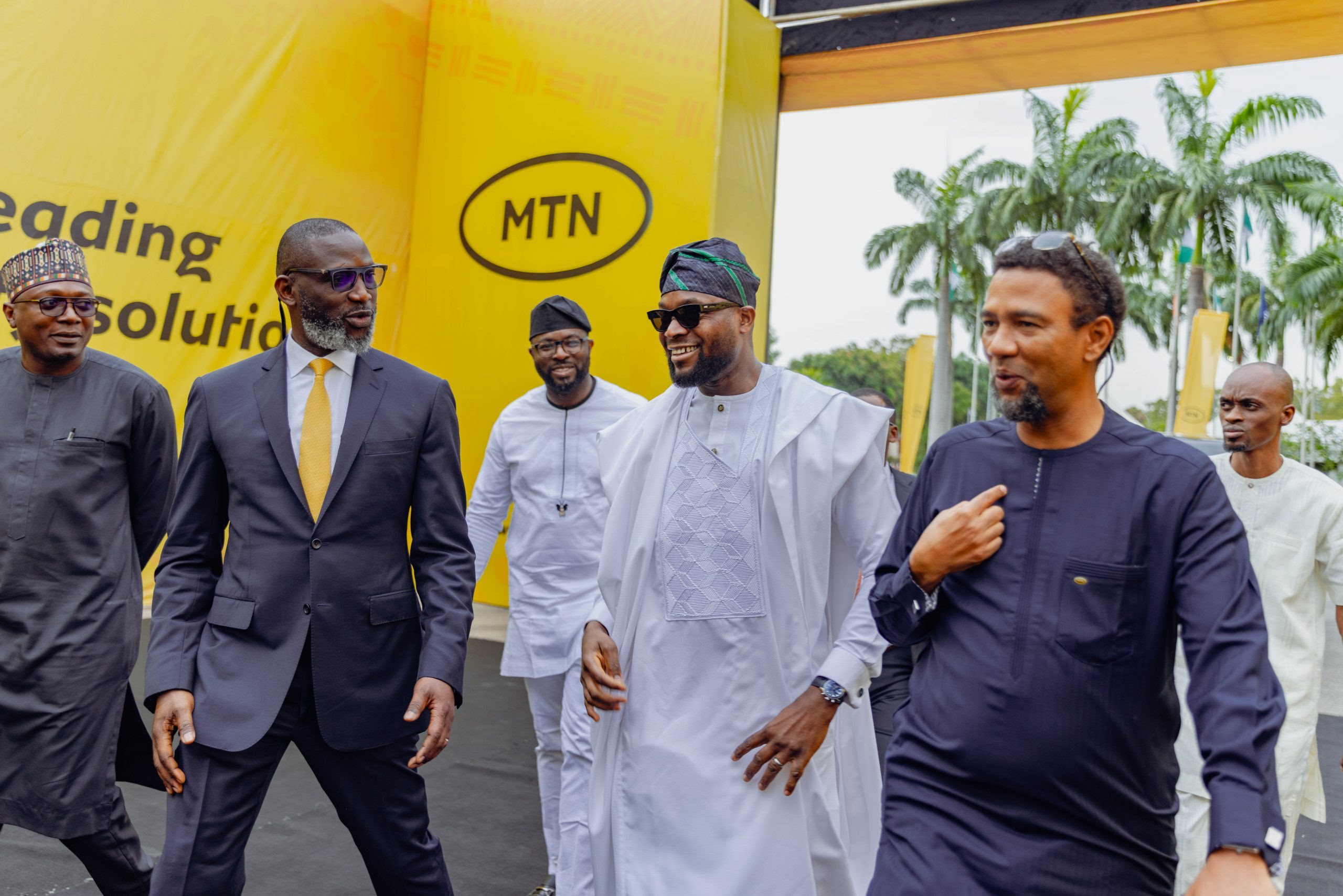
MTN’s $6B AI infrastructure bet
MTN Group is partnering with UAE investor Tarek Al Ashram to develop AI-ready data centres across Africa, initially targeting South Africa and Nigeria with 150MW of capacity.
Why it matters: The deal combines Africa’s largest telecom footprint with Gulf capital and data-centre expertise, pointing to a new model for financing large-scale AI infrastructure without relying entirely on government balance sheets.
Kenya gets more realistic about compute
At the Africa AI Stakeholder Meeting in Nairobi, policymakers and industry leaders highlighted that Kenya accounts for just 0.6% of global data-centre capacity, while existing facilities operate at only 37% average utilisation. The discussion also focused on power, water and actual demand.
Why it matters: The conversation is shifting from simply building more data centres to making sure new capacity is commercially viable and supported by the right infrastructure.
South Africa remains the regional anchor
Johannesburg continues to attract major data-centre investment as cloud and AI demand grows, with NVIDIA and Cassava Technologies having committed to an AI-ready infrastructure programme valued at approximately $700 million.
Why it matters: South Africa remains a key market for hyperscale infrastructure, although power constraints are pushing developers towards more distributed approaches.
Nigeria doubles down on the ecosystem
GITEX Nigeria 2026 brought together more than 750 startups from Nigeria and 25+ countries, alongside dedicated AI, digital public infrastructure and fintech programming.
Why it matters: Nigeria is increasingly positioning itself as a regional platform for AI, fintech and startup activity, with institutions and government playing a more active role in building the ecosystem.
African AI startups with a working product and early commercial traction can apply for a six-week programme offering up to $200,000 in zero-equity investment to selected startups. Deadline: 30 September 2026.
Apply now →Climate-tech startups using AI, data, software or advanced computing can apply for up to $2 million in AWS credits shared across up to 10 startups, helping selected teams offset the cost of compute, storage and deployment. Deadline: 30 September 2026.
Apply now →Early-stage African startups and small technology companies working across hardware, software, gaming and connected technologies can access a $10,000 pledge, crowdfunding support, training and Google tools. Deadline: 30 September 2026.
Apply now →African and diaspora founders building export-focused businesses across manufacturing, agriculture, agro-processing, consumer and industrial products can win a $20,000 grant, with potential follow-on pilot and scale-up financing. Early deadline: 30 September 2026; regular deadline: 14 October 2026.
Apply now →The Last Word
That’s a wrap on Issue 009 of The Ecosystem Brief.
As always, we’ll be back next Tuesday with more of the developments and signals worth knowing. Thank you for reading.
Until next week,
— The Ecosystem Brief
Never miss an issue
Join the founders, investors, and operators who start their Tuesday with The Ecosystem Brief.
Subscribe on the homepage →