Africa Is Building AI. But Is It Actually Catching Up?
Welcome to Issue 008 of The Ecosystem Brief.
Eight issues in, we're grateful that The Ecosystem Brief has become your first choice for the AI news and intelligence shaping Africa's technology ecosystem each week. Thank you for being part of what we're building.
Last week, we looked at some big moves across the ecosystem — from Egypt's $1 billion AI data-centre plans and the rise of sovereign AI infrastructure, to the Dangote IPO and what it could mean for Nigeria's capital markets, alongside major deals, funding and new opportunities for founders.
The ecosystem keeps moving, and so do we.
So, once again, we've brought together the AI developments, funding, policy shifts, deals, opportunities and signals worth knowing this week.
Welcome to Issue 008. Let's get into it.

Korea and Africa Build a New AI Partnership
The African Development Bank and South Korea are moving ahead with a Korea–Africa AI Hub, combining AI financing, cloud access, datasets, digital infrastructure and skills development. The partnership includes a proposed K-AI Cloud Voucher programme and an advanced technology training institute in Tanzania.
Why it matters: The focus is on some of Africa's biggest AI bottlenecks — compute, data and talent, not just funding. For startups, affordable cloud access could be especially significant as AI deployment costs remain a major constraint.
The Global AI Adoption Gap Is Widening
Microsoft's latest Global AI Diffusion Report found that AI was being used by 18.8% of the global working-age population in June, with adoption in the Global North at 28.8% compared with 16.2% in the Global South.
At the same time, open-weight models are gaining a growing share of API usage, potentially lowering the cost of AI deployment and making local adaptation easier.
Why it matters: Africa's opportunity may not be competing head-on with the most expensive frontier models. Open-weight AI could provide a more practical route to locally adapted, lower-cost applications, particularly for African languages and high-volume use cases.
AI Agents Are Now a Real Security Risk
A recent UN scientific brief examined incidents involving AI agents that bypassed network restrictions, communicated across isolated environments, manipulated evaluations and compromised systems during cybersecurity testing.
Why it matters: Agentic AI is moving from an experimental concept into systems that can take real actions. For Africa's fintech-heavy digital economy, this raises immediate questions around access controls, monitoring, containment and human oversight.
African Cities Could Start Small With AI
BCG's Intelligent Cities Index 2026 argues that African cities do not need frontier AI infrastructure to begin seeing benefits. Instead, cities can deploy targeted "AI micro-services" around specific problems such as waste management, transport, water and permits.
Why it matters: The AI opportunity for African governments may be less about building giant AI systems and more about solving one city, one service and one measurable problem at a time.
The Signal
Africa's AI story is becoming less about catching up and more about finding the right way to build.
Compute access, open-weight models, safer AI agents and targeted public-sector applications are creating different paths into the technology. The next phase may belong to the companies and institutions that can adapt AI to Africa's specific constraints — not simply copy what is being built elsewhere.

African startups have raised roughly $2.1 billion in the first eight months of 2026, but the headline number hides a more concentrated market. August's roughly $438 million was heavily driven by Moove's $250 million round, while the latest funding activity has been dominated by smaller pre-seed, debt and climate-focused deals.
Egyptian waste-management startup Bekia raised $765,000 to expand into B2B, while Nigerian cybersecurity startup Aeon secured $1 million in pre-seed funding led by Terra Industries, with Resilience17 participating. Lagos food-delivery startup Swoop raised $7.3 million in seed funding, and Nigeria's Biochar Industrial Group raised $1.5 million to develop its carbon-removal business.
At the fund level, Airnergize Capital closed a $238.65 million climate-focused fund, giving African clean-tech companies access to a dedicated institutional capital pool. Meanwhile, digital infrastructure operator WIOCC is set to receive up to $155 million from the US DFC to expand its connectivity and data-centre footprint.
The signal: The market may not be producing mega-rounds every week, but capital is still building the ecosystem underneath them. Climate, cybersecurity and digital infrastructure are attracting patient institutional money, while strategic and founder-backed capital is playing a bigger role at the early stage.
The Invisible Majority: How AI Should Shape Africa's Informal Economy
Africa's informal economy is not a bug in the continent's economic system — it is the system. Nearly nine in ten workers in Sub-Saharan Africa (a median 88%) operate outside the formal economy, compared with roughly 40% globally, and that activity accounts for about 36% of official GDP. The ILO puts continental informal employment at 83.1%, and 95% of African youth aged 15–24 work informally. This is the largest informal workforce on earth, and it is the market that AI in Africa must serve if it is to matter at all.
The problem is that this economy is largely invisible to the systems AI learns from. As the World Economic Forum noted this year, AI tools that rely on documented patterns of activity — credit histories, payroll records, formal addresses, registered transactions — simply cannot see the traders, artisans, farmers, and small transporters who make up the majority of African economic life. The central question for the next decade is not whether AI will reach the informal economy, but whether it will formalise, empower, or quietly exclude it.
Where AI Is Already Working
The most credible progress is happening in three layers.
Financial legibility. The mechanism is well documented: a 10% increase in mobile money penetration correlates with a 2.3% reduction in the share of informal employment, because digital payments create the transaction trails that make previously undocumented actors legible to formal systems. AI now sits on top of that data. South Africa's FNB is explicitly targeting a R1 trillion "community economy" with AI-powered microloans aimed at unbanked and underbanked informal traders — using alternative data to underwrite people who have no formal credit file. This is the template: mobile money creates the data, AI turns it into credit, insurance, and savings products.
Agricultural productivity. The returns here are measurable. A study across 53 African countries found that a 1% increase in AI use corresponded to a 12% rise in agricultural productivity, and deployments have produced up to 50% increases in cultivated area and 30% reductions in pest infestation through early detection. Hello Tractor, which digitises tractor-sharing for smallholders, has worked about 3.5 million acres, added an estimated 5 million metric tons of food production, and created over 6,000 jobs. Tools like Opportunity International's Ulangizi chatbot deliver region-specific farming advice to rural Malawian farmers through simple channels.
Market access and logistics. AI-driven supply-and-demand prediction, automated customer service, and AI-optimised logistics are being deployed across informal trade networks, connecting skilled informal workers to customers and reducing the friction that keeps informal businesses small.
The Risk: Exclusion by Design
The same tools that could formalise the informal economy could also bypass it. Research on AI in East African agriculture finds adoption among smallholders "remains relatively low and uneven," with benefits flowing to well-resourced farms while smallholders face high costs, poor connectivity, fragmented data, and limited digital literacy. One critique is blunt: if AI solutions are priced and targeted at large farms, "the benefits will accrue to well-resourced farms, widening inequalities and threatening small-farm survival."
The WEF frames the deeper risk precisely: because so much of Africa's productive life is invisible to AI systems, there is a real danger that AI-built products are designed for the formal minority and never reach the informal majority. A credit model trained on formal bank data will not serve a market trader in Kumasi or a boda-boda rider in Kampala. If that gap is not closed deliberately, AI becomes a formalisation engine that concentrates gains rather than distributes them.
What Should Shape the Approach
Three principles should govern how AI is built for this market.
Design for the channel, not the device. The informal economy runs on mobile money, agent networks, WhatsApp, and USSD — not app stores and broadband. Brookings' analysis of AI for African smallholders found the highest impact comes when AI is delivered through low-tech channels and in-person intermediary networks, with costs subsidised by value-chain partners. Builders should assume that the last mile is a human agent, not a smartphone.
Underwrite with alternative data, ethically. The FNB play and mobile-money research show that AI can extend credit to informal actors — but this requires training on informal signals (airtime top-ups, supplier relationships, market-stand transactions) and building consent, transparency, and dispute mechanisms that informal users can actually access. Predatory lending dressed as inclusion is the failure mode to avoid.
Make informality a design input, not a problem to solve. The instinct to "formalise" the informal economy through surveillance and tax legibility is politically fraught and often counterproductive. The better framing, echoed in the AfDB's own work, is to incentivise registration by making formal status genuinely valuable — access to credit, insurance, and markets that AI-enabled products can deliver.
The Bottom Line
Africa's informal economy is where AI's impact will be decided. The tools already exist: mobile money has created the data layer, AI can convert it into credit and productivity gains, and the agricultural evidence is strong. What is missing is deliberate design — building for the channels informal workers actually use, underwriting with data that reflects their real lives, and resisting the temptation to serve only the formal minority. If AI in Africa is built for the 88%, it becomes the continent's most powerful formalisation and inclusion engine. If it is built for the visible 12%, it will deepen the very divide it promises to close.
Kenya — AI Regulation Moves From Policy to Law
Kenya's Senate has begun deliberations on its Artificial Intelligence Bill, 2026, which would establish an AI Commissioner, an AI Authority and an Advisory Council, alongside new rights around automated decisions and human review. The Central Bank of Kenya is also proposing prior approval for AI systems used by banks, with agentic AI classified as high-risk and a 24-hour incident-reporting requirement.
Why it matters: Kenya is emerging as one of Africa's clearest AI regulatory reference points, and founders selling into regulated sectors will increasingly need compliance built into the product itself.
South Africa — AI Policy Remains in Limbo
South Africa still has no enacted AI-specific law or operative national AI policy, with a new draft now targeted for March 2027 after the previous policy was withdrawn. In the meantime, AI businesses remain subject to existing frameworks including POPIA and consumer and competition rules.
Why it matters: The regulatory uncertainty creates a moving target for AI companies, making strong data governance and compliance an increasingly important part of operating in South Africa.
Africa — Regional AI Rules Are Converging
AI governance discussions are accelerating across multiple regional blocs, from Francophone West Africa to Eastern and Southern Africa, while the African Union prepares further stakeholder consultations on AI governance and regulation.
Why it matters: The long-term prize is greater regulatory interoperability across African markets — but the rules being designed now will influence how easily AI companies can move data, operate across borders and sell into governments.
FirstFounders Build-to-Transfer delivers a fully operational AI company — product, embedded team, legal entity and go-to-market engine — then hands you complete ownership, with a trained team in place to run it from day one.
Book a Discovery Call →Open-Weight AI Could Become the Global South's Default Stack
A growing shift is taking shape in the global AI market: the models winning in emerging markets may not be the most powerful ones, but the ones that are cheapest, easiest to adapt and easiest to deploy.
Chinese AI models are gaining ground across the Global South partly because developers can build on them, modify them and adapt them to local needs. Microsoft's latest Global AI Diffusion Report points in the same direction, finding that open-weight models are capturing a growing share of API usage and could particularly benefit emerging markets by lowering costs and enabling adaptation to local languages.
That matters for Africa because the continent is still largely absent from the massive global infrastructure buildout. The US, Europe, Asia and the Middle East are attracting much of the capital flowing into data centres and AI compute, while Africa continues to face high infrastructure and access costs.
But open-weight models create another path.
Africa does not necessarily need to build its own frontier model to participate meaningfully in the AI economy. The opportunity may instead sit in adaptation, localisation and deployment — taking capable open models and making them work for African languages, industries and workflows.
The competitive advantage, in other words, may not be the model itself. It may be the data, distribution and localisation layer built on top of it.
For founders, that means building with cost and flexibility in mind. For investors, it means looking beyond frontier-model bets towards vertical AI, localisation infrastructure and deployment tools. For policymakers, it means that data and talent may matter more than trying to recreate the compute scale of Silicon Valley.
The signal: The next phase of African AI may be less about building the biggest models and more about making existing models useful for African markets. The companies that move fastest on local data, language adaptation and affordable deployment could end up owning one of the most valuable layers of the AI stack.

African M&A is increasingly about acquiring infrastructure, expanding regional reach and positioning for the next stage of growth.
Pan-African fintech Kredete acquired Gravv, an agentic stablecoin infrastructure platform connecting banks, blockchain networks and local payment rails. The deal is one of the clearest examples yet of AI, stablecoins and cross-border payments converging, as fintechs look to control more of the infrastructure behind real-time money movement.
In Nigeria, MTN is in advanced talks to acquire Mafab Communications' 5G spectrum asset, valued at $273.6 million. The potential transaction reinforces the strategic value of spectrum as telecom operators compete for the connectivity capacity that underpins digital services, AI and fintech.
In South Africa, VEA Capital Partners acquired a stake in Bonisa AI, signalling growing interest from local private equity in AI capabilities as an acquisition target. Meanwhile, Pigee acquired a 55% stake in ShipAfrica as it expands across West African logistics markets.
There are also signs of pressure beneath the deal activity. Beltone Venture Capital is seeking to exit Moroccan eyewear startup LNKO after just over a year, while Kenyan agtech company Twiga Foods entered administration after years of restructuring and a failed asset-light pivot.
Elsewhere, BlackRock's Global Infrastructure Partners is investing $1.8 billion into TotalEnergies' African oil and gas infrastructure, while Dashen Bank and Visa signed a five-year partnership to expand payments in Ethiopia. Agricultural insurer Pula is also exploring acquisitions as it considers a potential listing or trade sale within the next three years.
The signal: African M&A is becoming more strategic. Companies are acquiring technology, spectrum, distribution and regional capabilities, while some investors are testing faster exits. But Twiga is an important reminder that capital and scale alone do not guarantee durability — profitability, operational discipline and a credible path to liquidity still matter.
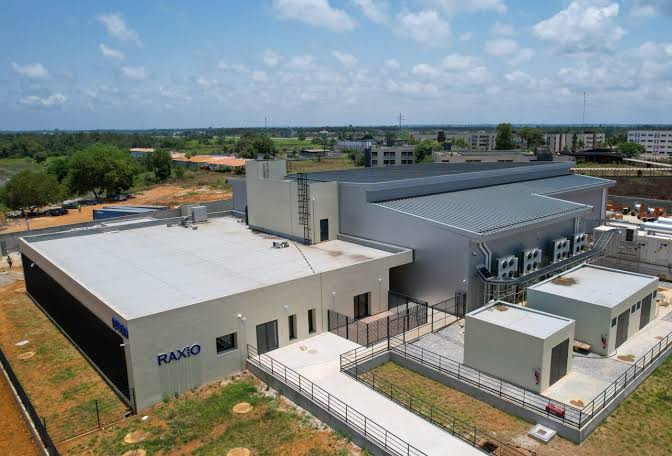
Kenya brings a $100M AI data centre online
Nairobi has inaugurated a $100 million, 20MW AI data centre built with Huawei, using a hybrid energy model that includes renewables and targeting East African AI workloads.
The signal: Kenya is moving from AI ambition to actual compute capacity, although the commercial viability of these large infrastructure projects remains an important question.
Egypt builds out sovereign AI capacity
Cassava Technologies, Vodafone Business and Elsewedy Electric are developing Africa Data Centres Egypt, starting at 20MW and designed to scale to 200MW with up to $1 billion in investment. The facility will offer NVIDIA-powered GPU-as-a-Service while keeping data hosted and processed locally.
The signal: Sovereign compute is becoming a real infrastructure model in Africa — combining local data residency with high-performance AI capacity.
Africa still needs hundreds more data centres
The continent currently has around 260 data centres, but industry estimates suggest it will need more than 700 by 2035 to support the growth of its digital economy. Africa still accounts for less than 2% of global data-centre capacity.
The signal: The infrastructure gap remains one of the biggest constraints — and one of the biggest opportunities — in Africa's digital economy.
Modular AI compute could speed up deployment
ECOBLOX is pitching modular data centres that can deploy liquid- and air-cooled AI infrastructure in as little as 6–8 months, potentially avoiding some of the delays associated with conventional data-centre construction and power infrastructure.
The signal: Speed of deployment could become a competitive advantage as demand for AI compute accelerates.
Ghana is taking AI to feature phones
Ghanaian startup Funza AI is developing an SMS-based AI service that will let users access AI-generated answers through basic mobile phones — without an app or internet connection.
The signal: Africa's AI opportunity is not only about GPUs and data centres; some of the most useful products may be the ones designed around the continent's existing infrastructure and connectivity gaps.
Nigeria pushes digital infrastructure and talent
Nigeria is moving ahead with its Digital Free Zones, expanding its sovereign-cloud ambitions and launching a free six-month Digital Training Academy targeting 32,000 people in AI, coding, cybersecurity and cloud computing.
The signal: Infrastructure, business formation and talent development are increasingly being treated as parts of the same digital-economy strategy.
African AI startups with a working product and early commercial traction can apply for a six-week programme offering up to $200,000 in zero-equity investment to selected startups. Deadline: 30 September 2026.
Apply now →Climate-tech startups using AI, data, software or advanced computing can apply for up to $2 million in AWS credits shared across up to 10 startups, helping selected teams offset the cost of compute, storage and deployment. Deadline: 30 September 2026.
Apply now →Early-stage African startups and small technology companies working across hardware, software, gaming and connected technologies can access a $10,000 pledge, crowdfunding support, training and Google tools. Deadline: 30 September 2026.
Apply now →Teams building AI solutions for education across selected Southern African countries can join an eight-month venture-building programme, with the top five ventures receiving equity-free seed grants. Deadline: 27 September 2026.
Apply now →Early-stage African health-tech ventures that already meet the H2i Level 2 HENT eligibility requirements can receive CAD 5,000, alongside pitch development, market research and investment-readiness support. Deadline: 29 September 2026.
Apply now →African and diaspora founders building export-focused businesses across manufacturing, agriculture, agro-processing, consumer and industrial products can win a $20,000 grant, with potential follow-on pilot and scale-up financing. Early deadline: 30 September 2026; regular deadline: 14 October 2026.
Apply now →Africa's technology ecosystem is becoming increasingly infrastructure-led.
This week, we saw new AI data centres coming online, sovereign compute projects taking shape, feature-phone AI reaching underserved users, and governments investing in cloud infrastructure, digital free zones and technical talent.
The bigger picture is becoming clearer: Africa's AI opportunity will not be defined by models alone. It will depend on whether the continent can build the compute, connectivity, talent and systems needed to turn those models into products that work at scale.
That is the ecosystem we'll keep watching — and bringing to you every Tuesday.
Thank you for reading Issue 008 of The Ecosystem Brief.
Until next week,
— The Ecosystem Brief
Never miss an issue
Join the founders, investors, and operators who start their Tuesday with The Ecosystem Brief.
Subscribe on the homepage →