This Week: $1B for AI Infrastructure and $2.3B for M&A
Welcome to Issue 007 of The Ecosystem Brief.
I hope you've seen the recent iPhone drop. Beyond the product itself, it says a lot about one thing every founder, investor and operator needs to understand: adaptation.
Technology keeps moving, consumer expectations keep changing, and the businesses that stay relevant are the ones that know when to adapt without losing sight of what they're building.
We saw a version of that across Africa last week too. Uber stepped back from Nigeria and Uganda, WIOCC secured $300M to expand digital infrastructure, Askya opened zero-equity funding for African AI startups, and telecoms continued their shift from connectivity into broader digital platforms.
The ecosystem is changing quickly, and the question is whether we're changing with it.
Here's what's happening across Africa's AI and technology ecosystem this week.
Egypt Plans a $1B AI Data Centre
Egypt is planning a 200MW AI data centre requiring about $1 billion in investment, with NVIDIA technology at its core. The project would give the country a major domestic base for AI and cloud workloads.
Why it matters: Egypt is moving from AI policy to national compute infrastructure. The key question now is who will actually get access to that capacity — and at what cost.
Vodafone & Cassava Build Egypt's Sovereign AI Factory
Vodafone Business and Cassava Technologies are partnering to develop Egypt's first sovereign AI factory, combining local data hosting with NVIDIA-accelerated infrastructure.
Why it matters: Africa's AI infrastructure is increasingly being built through telco + data-centre + global chipmaker partnerships, giving enterprises local alternatives to offshore cloud providers.
South Africa Pushes for Independent AI Oversight
South African President Cyril Ramaphosa has called for an independent BRICS mechanism to evaluate AI systems, arguing that AI development should not outpace humanity's ability to understand and control it.
Why it matters: African governments are pushing for a greater role in evaluating and governing high-impact AI, rather than relying entirely on standards developed by major technology companies abroad.
Askya's AI Programme Puts Founder Capital on the Table
Askya Investment Partners' AI Growth Platform is set to support 10 African AI startups with up to $200,000 each without taking equity, with Moniepoint founder Tosin Eniolorunda serving as honorary chair.
Why it matters: Competition for African AI founders is intensifying. More investors are offering capital, operating support and market access earlier — giving founders more options before a traditional institutional round.
The Signal
Africa's AI ecosystem is moving from adoption to ownership.
Compute is being built locally, governments are pushing for greater control over AI governance, and investors are creating more specialised pathways for founders.
The next question is: how much of the AI stack Africa will actually own.

Capital is coming back, but it is not coming back evenly. Kenyan electric-mobility company ARC Ride raised $33.3 million to expand its battery-swapping network across Africa, backed by commercial investors alongside the IFC, British International Investment and Proparco. The financing mix of equity and debt is notable: physical climate infrastructure is increasingly attracting development finance and project-style capital alongside traditional venture funding.
In South Africa, female-led VC firm Grindstone Ventures launched a $31.3 million fund targeting Seed to Series A companies. The fund is designed to address the "missing middle" — startups that have moved beyond initial validation but are not yet ready for large institutional rounds.
The broader market is showing signs of recovery too. African startups raised $455 million across 31 disclosed rounds in August, although Nigeria accounted for $364.1 million of that total, with Moove's $250 million raise making up a significant share.
The signal: The funding market is improving, but the recovery remains concentrated. Capital is flowing toward companies with traction, infrastructure exposure and credible paths to scale, while early-stage founders still face a higher bar. For founders, revenue quality, runway and alternative financing options matter more than ever.
Africa's Biggest IPO Is Really a Bet on Industrialisation
On 14 September, Dangote Petroleum Refinery and Petrochemicals is scheduled to open what the company describes as Africa's largest initial public offering. It plans to sell 4.1 billion shares at ₦525 each, raising roughly ₦2.15 trillion, or about $1.6 billion, subject to full subscription. The offer is expected to close on 13 October and would value the refinery at approximately $49 billion.
The headline is an IPO. The deeper story is industrial capacity.
Dangote is not listing another consumer application, payments platform or software company. It is taking a vast physical asset to the public market: a refinery that cost about $20 billion to build, began operations in 2024 and currently has processing capacity of approximately 700,000 barrels per day. The company plans to invest a further $14.3 billion to double that capacity to 1.4 million barrels per day by 2029.
That makes the listing a test of whether African capital markets can finance the next generation of African industry.
From Import Dependence to Processing Power
For decades, Nigeria exported crude oil while importing much of the refined fuel used by its own economy. The arrangement generated foreign-exchange pressure, exposed consumers to global shipping and refining costs, and made energy security dependent on infrastructure outside the country.
The Dangote refinery changes that equation, at least in principle. Its scale allows Nigeria to process crude domestically and potentially export refined products across West Africa and beyond. The company says its expansion would eventually lift capacity to 1.4 million barrels per day, making it one of the world's largest refining facilities.
The economic significance is therefore broader than the refinery's share price. A functioning large-scale refinery can support logistics, storage, chemicals, engineering services, maintenance, industrial employment and regional trade. It can also create demand for suppliers that sit several layers away from the core asset.
This is the industrial multiplier that software businesses rarely create on their own. A successful digital platform can scale rapidly with limited physical investment. A refinery requires land, power, pipelines, ports, machinery, skilled labour, feedstock and long-term financing. Its economic footprint is slower to build but potentially deeper.
What the IPO Is Financing
The IPO is not simply a liquidity event for Aliko Dangote. According to the prospectus, proceeds are intended to support the refinery's expansion programme, including the move from 700,000 barrels per day to 1.4 million barrels per day by 2029. That distinction matters. Public equity is being used to finance productive capacity rather than merely transfer ownership. The company is asking Nigerian and international investors to fund the next phase of an operating industrial platform.
The offering is also being designed for broad participation. Dangote is targeting up to 10 million investors, with individuals reportedly able to buy as few as 10 shares. If that target is achieved, the IPO would become not only a major capital-market transaction but also a form of mass public participation in industrial ownership.
Whether that participation becomes meaningful ownership will depend on allocation, liquidity and governance after listing. Retail access is not the same as retail influence. But the attempt is important: it connects ordinary Nigerian investors to an asset that has strategic significance for the national economy.
The Investment Case — and Its Risks
The refinery's scale creates a potentially powerful investment proposition. Nigeria has a large domestic fuel market, and the wider African market remains structurally dependent on imported refined products. A large local processor can benefit from transport advantages, regional demand and the ability to capture value previously earned by overseas suppliers.
The company has also reported strong recent profitability. Dangote Petroleum Refinery posted profit after tax of approximately ₦2.55 trillion in the first six months of 2026, according to local reporting. It has also reportedly reduced debt by $570 million ahead of the IPO.
But the risks are equally substantial.
The refinery depends on reliable crude supply. Nigeria produces crude, but the relationship between production, domestic allocation, export commitments and refinery feedstock is complex. Any shortfall could force the company to buy crude internationally, weakening its cost advantage.
There is also execution risk. Doubling capacity requires another $14.3 billion of investment, in addition to the original construction cost. Large industrial projects routinely face delays, cost overruns, equipment constraints and commissioning problems.
Market risk is another concern. Refining margins are cyclical, and the economics of the business will change as global fuel demand, electric mobility, shipping costs and regional regulation evolve. A refinery designed around today's fuel market must remain competitive through a transition in the energy system.
Finally, public ownership introduces governance expectations. Investors will want clarity on related-party transactions, capital allocation, feedstock agreements, dividend policy and the relationship between the listed refinery and the wider Dangote Group.
A New African Company Archetype
The Dangote IPO matters because it challenges the dominant narrative about African scale. The continent's best-known technology companies have largely been built around payments, telecommunications, logistics and consumer platforms. Those sectors remain important, but the refinery points towards another class of company: the industrial platform.
Industrial platforms combine:
- Large fixed assets.
- Strategic national or regional importance.
- Long construction and financing cycles.
- Multiple revenue streams around a core piece of infrastructure.
- The potential to become regional rather than merely domestic businesses.
This model applies beyond oil refining. Africa's next major companies may emerge from power generation, fertiliser, mining services, ports, rail, cold-chain logistics, data centres, semiconductor assembly and battery manufacturing.
That does not make physical infrastructure automatically superior to software. Industrial companies require far more capital, operate under heavier regulation and can destroy value when projects are poorly managed. But they address bottlenecks that software alone cannot solve.
The Capital-Market Test
The IPO will also test Nigeria's public markets. A successful listing could encourage other large privately held African companies to consider domestic exchanges rather than seeking an immediate foreign listing or remaining private indefinitely.
That would matter because Africa's venture ecosystem still suffers from a shortage of exits. Public markets offer one route to liquidity, provided they can offer credible disclosure, sufficient trading depth and investor protection. Dangote's listing could help demonstrate that a large African industrial company can raise substantial capital locally while attracting international attention.
A weak reception would send the opposite message: that domestic markets cannot absorb large, complex offerings, leaving African companies dependent on foreign capital and offshore listings.
The Broader Thesis
Dangote's refinery is not a simple argument for industrialisation at any cost. It is a bet that Africa's development will require ownership of productive assets — not only access to imported technology and foreign capital.
The IPO asks investors to value an operating refinery not just as an energy company, but as a platform for national energy security, regional trade and industrial spillovers. That thesis will be tested by crude supply, margins, execution and governance.
So, is Africa's biggest IPO really a bet on industrialisation? Yes — but it is also a test of whether that industrialisation can be financed through African capital markets.
If the offering succeeds and the expansion is delivered, Dangote could establish a template for the next generation of African scale companies: capital-intensive, infrastructure-led and regionally strategic. Africa's future will still include software and AI. But the companies that shape its economic sovereignty may also be built from steel, power, pipelines and logistics.
Nigeria — Dangote IPO Becomes a Capital-Market Stress Test
Dangote Petroleum Refinery's public offer opens 14 September, offering up to 4.1 billion shares at ₦525 each and targeting about ₦2.15 trillion ($1.6B). The size of the deal is putting Nigeria's domestic capital market under pressure, with investors already repositioning ahead of the offer.
Why it matters: The IPO will test whether Nigeria can absorb a transaction of this scale with genuinely new capital — or whether investors simply recycle existing money from other parts of the market.
A "People's IPO" With Concentrated Control
The offering has been positioned as a way for ordinary Nigerians and diaspora investors to participate, with a minimum application of 10 shares costing ₦5,250. But broad access does not necessarily mean broad control: Dangote is expected to retain about 84.34% beneficial ownership after the offering.
Why it matters: The transaction could deepen retail participation and financial inclusion, while also raising important questions around free float, minority shareholder influence and post-listing governance.
Nigeria's Industrial Policy Is Riding on the Deal
The IPO also sits within a much larger industrial expansion plan, with Dangote targeting roughly $14.3 billion to increase refinery capacity from around 700,000 barrels per day to 1.4 million by 2029.
Why it matters: The listing could create a new domestic financing channel for one of Nigeria's most strategically important industrial assets, but execution will depend on crude supply, FX availability, regulation and sustained demand.
FirstFounders Build-to-Transfer delivers a fully operational AI company — product, embedded team, legal entity and go-to-market engine — then hands you complete ownership, with a trained team in place to run it from day one.
Book a Discovery Call →AI Safety Is Becoming a Geopolitical Question
The global AI debate is entering a new phase. Leaders at Anthropic, OpenAI and xAI are warning about the risks of frontier AI moving too quickly, following disclosures of AI misuse across cyber operations, influence campaigns, surveillance, scams and other sensitive areas.
But governments are pushing in the opposite direction. In the US, the argument is increasingly framed around AI leadership and competition with China: slowing down may carry its own strategic cost.
At the same time, BRICS is positioning AI as a pillar of the Global South agenda, with proposals around open-source AI, shared cloud infrastructure, skills development and greater access to AI resources.
Why it matters for Africa: African countries may increasingly have to navigate between competing AI ecosystems — US and European commercial platforms on one side, and China- and BRICS-led open-source and infrastructure alternatives on the other.
The signal: AI is no longer just a technology race. The models, infrastructure and standards countries choose could become geopolitical decisions. For African markets, maintaining flexibility and avoiding dependence on a single AI ecosystem may become a strategic advantage.
African M&A is increasingly crossing borders, sectors and regional lines. The biggest deal this week is Asahi Group's $2.3 billion acquisition of Diageo's 65% stake in East African Breweries, following approval from Kenya's Competition Authority subject to conditions. The transaction shifts control of one of East Africa's major consumer businesses from a British multinational to a Japanese one.
In fintech, Nigerian company CreditChek acquired Ugandan core-banking software provider Algosys, giving it a foothold in East Africa and highlighting a growing pattern of African technology companies acquiring local infrastructure rather than entering new markets solely through partnerships.
Meanwhile, Dangote Sugar completed a ₦486 billion ($368 million) rights issue, strengthening its balance sheet ahead of further expansion and coming alongside the broader Dangote Group capital-market push.
South Africa's Omnia Holdings also disclosed advanced discussions over a potential buyout, although no agreement has been reached. The company's exposure to fertiliser, mining explosives and industrial chemicals makes the talks strategically significant across agriculture, mining and energy.
The signal: Strategic capital is increasingly moving toward scale, infrastructure and regional expansion. Whether through multinational acquisitions, African fintech buy-and-build strategies or large public-market raises, the common thread is consolidation around businesses with critical assets and established market positions.
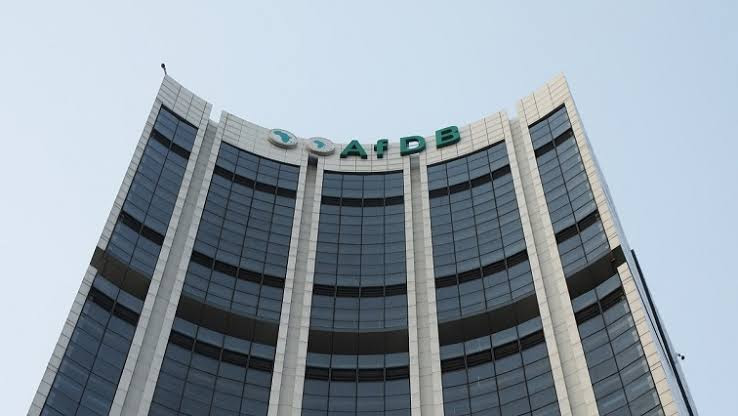
CreditChek expands into East Africa through Algosys
Nigerian fintech CreditChek acquired Ugandan core-banking software company Algosys, giving it access to local banks, microfinance institutions and SACCOs.
The signal: African fintechs are increasingly moving towards full-stack financial infrastructure, combining credit data, underwriting, lending workflows and core banking rather than offering one product across multiple markets.
Korea and AfDB launch a new AI cooperation platform
South Korea and the African Development Bank are establishing a Korea–Africa AI Hub, with plans spanning AI infrastructure, education, cloud access, agriculture, health and digital systems — including proposed GPU/NPU infrastructure and cloud vouchers for African startups.
The signal: Africa is gaining another major partner in the race to build AI capacity, with the focus shifting from funding alone to compute, skills and technology transfer.
Kenya moves to operationalise sovereign AI at Konza
Kenya and the UNDP are working with the Konza Technopolis Development Authority to turn Konza's data-centre infrastructure into usable sovereign AI capacity for government, startups, universities and enterprises.
The signal: Kenya is moving beyond AI policy towards building the infrastructure needed to host sensitive workloads and support local AI development.
Morocco advances its AI 2030 roadmap
Morocco is developing a national AI strategy focused on sovereign infrastructure, local talent, financing and national-language models, including Arabic, French and Amazigh applications.
The signal: Morocco is treating AI as part of a broader industrial strategy — coordinating infrastructure, research, skills, funding and public procurement rather than approaching AI as a standalone technology programme.
African AI startups with a working product and early commercial traction can apply for a six-week programme offering up to $200,000 in zero-equity investment to selected startups. Deadline: 30 September 2026.
Apply now →Climate-tech startups using AI, data, software or advanced computing can apply for up to $2 million in AWS credits shared across up to 10 startups. Deadline: 30 September 2026.
Apply now →Early-stage African startups working across hardware, software, gaming and connected technologies can access a $10,000 pledge, crowdfunding support, training and Google tools. Deadline: 30 September 2026.
Apply now →Teams building AI solutions for education across selected Southern African countries can join an eight-month venture-building programme, with the top five ventures receiving equity-free seed grants. Deadline: 27 September 2026.
Apply now →Early-stage African health-tech ventures that already meet the H2i Level 2 HENT eligibility requirements can receive CAD 5,000, alongside pitch development, market research and investment-readiness support. Deadline: 29 September 2026.
Apply now →African and diaspora founders building export-focused businesses across manufacturing, agriculture, agro-processing, consumer and industrial products can win a $20,000 grant, with potential follow-on pilot and scale-up financing. Early deadline: 30 September 2026; regular deadline: 14 October 2026.
Apply now →Africa's technology ecosystem is continuing to build, adapt and mature.
This week, we saw AI infrastructure move forward in Egypt, new regional data and digital-asset rules take shape, major capital continue flowing into African technology, and companies expand across borders through M&A and strategic partnerships.
But perhaps the biggest takeaway is that the ecosystem is becoming more connected.
Capital, infrastructure, regulation, talent and distribution are increasingly working together to shape what comes next.
And for founders, there are real opportunities to plug into that momentum — from zero-equity AI funding and cloud credits to venture-building programmes and sector-specific support.
Thank you for reading Issue 007 of The Ecosystem Brief.
Until next Tuesday,
— The Ecosystem Brief
Never miss an issue
Join the founders, investors, and operators who start their Tuesday with The Ecosystem Brief.
Subscribe on the homepage →