What Lagos Life Says About Africa’s Gaming Future
We made it to Issue 010 of The Ecosystem Brief.
Ten editions of tracking the companies, capital, technology, policies and opportunities shaping Africa’s technology ecosystem. We’re genuinely grateful to have you here and to have made it this far with you.
Before we get into this week’s edition, we want to hear from you.
We’ve put together a short feedback form to hear what you thought about Issues 001–009. What did you enjoy? What should we improve? What would you like to see more of? And, just as importantly, what should we keep doing?
Your feedback will help us shape the next phase of The Ecosystem Brief and make future editions even more useful.
And once again, congratulations to us on reaching Issue 010.
Now, let’s get into this week’s Brief.
AI Adoption Is Delivering Returns, But Scaling Remains Hard
A BearingPoint study found that nearly three-quarters of companies using AI are seeing positive financial results, yet only 13% are on track with their AI initiatives. Regulation and legacy IT integration remain the biggest barriers to moving beyond experimentation.
Why it matters: The AI conversation is shifting from what models can do to how organisations integrate them into real workflows. For African businesses, this creates opportunities for companies solving integration, compliance, data and automation problems.
MTN Builds Out AI Infrastructure as Mastercard Targets Fraud
MTN is advancing AI-ready data-centre projects across Africa, initially focused on South Africa and Nigeria, while Mastercard is working with Mojaloop and AfricaNenda on AI-powered fraud protection for African payment systems.
Why it matters: Two critical layers of the AI economy are developing at once: the infrastructure needed to run AI and the security systems needed to protect increasingly digital financial flows. Both are likely to become important markets for African technology companies.
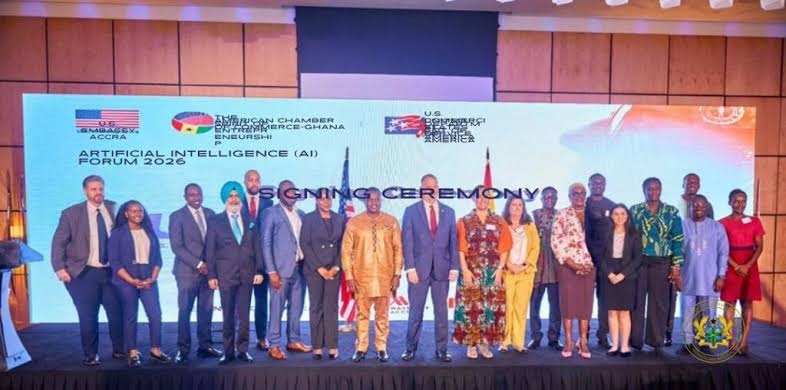
Ghana Puts Public-Sector AI Under Central Review
Ghana has announced that public-sector AI acquisitions will undergo centralised technical review before government agencies can procure them, assessing factors including security, suitability and technical performance.
Why it matters: Governments are becoming more deliberate AI buyers. For startups selling into the public sector, having a strong product is no longer enough. Security, privacy, interoperability, data ownership and auditability will increasingly influence procurement decisions.
Open-Weight and Specialised AI Models Keep Expanding
Reflection AI has launched Beam, a 501-billion-parameter open-weight model, while OpenAI has introduced pricing for GPT-Rosalind, a specialised model focused on biology and drug discovery.
Why it matters: The model market is becoming more fragmented, with large general-purpose models, open-weight systems and specialised models serving different needs. For African builders, the opportunity may lie in adapting these models to local languages, datasets and industry-specific problems rather than competing with frontier labs.
Enterprise AI Is Learning to Understand How Companies Work
US startup Zeroset has raised $5.2 million for technology that gives AI agents deeper context about an organisation by connecting workplace tools, documents, workflows and past decisions.
Why it matters: The next layer of enterprise AI may be less about better chatbots and more about context engineering: helping agents understand how an organisation actually operates. That is highly relevant to sectors such as banking, healthcare, logistics, telecoms and government across Africa.
The Signal
AI is moving from the model layer into the organisation.
The biggest opportunities are increasingly around infrastructure, integration, fraud prevention, governance and context. For African companies, the winners may be the ones that can take increasingly capable AI models and make them work reliably within the continent’s real-world systems.
The latest funding activity shows capital continuing to move deeper into the infrastructure and security layers of AI, rather than only into applications.
Armadin raised $255.5 million in Series B, led by Andreessen Horowitz, at a valuation of approximately $2.5 billion, to build security infrastructure for AI agents and enterprise AI systems. As companies give agents access to code, business systems and sensitive data, monitoring, permissions and containment are becoming major spending categories.
GMI Cloud raised $223 million in Series B for AI cloud infrastructure and GPU capacity, with investors including NVIDIA. The round reinforces the broader shift towards financing the infrastructure required to run AI at scale.
Meanwhile, OneByZero secured $20 million in Series A to deploy AI agents inside enterprises across Asia-Pacific, highlighting investor demand for platforms that connect AI agents directly to real business workflows.
In deep tech, Satlyt raised $8 million for AI-enabled satellite infrastructure. With roots in Nairobi and links to Kenya and Angola, the company is an example of African deep-tech attracting capital around globally relevant infrastructure.
Finally, Mission Mobile secured up to $30.1 million in financing to expand smartphone access in South Africa. While not an AI round, the financing highlights an important foundation for AI adoption: devices and connectivity still determine who can participate in the digital economy.
The signal: Investors are increasingly funding the layers that make AI usable and scalable: security, compute, enterprise infrastructure and access. For Africa, that creates opportunities across the stack, from sovereign cloud and AI security to the underlying devices and connectivity that expand adoption.
Lagos Games, AI and Africa’s Next Growth Engine
The rise of Lagos Run and Lagos Life signals a new phase for African gaming: locally recognisable stories are becoming globally shareable products. These games show that African developers do not need to imitate foreign worlds to attract players; they can turn everyday African life, humour, transport and ambition into scalable digital entertainment.
1. Lagos Run made local culture playable
Lagos Run, created by Nigerian developer Opeyemi Adeniran, is a browser-based endless runner in which players drive a yellow danfo through Lagos traffic. Its route reportedly runs from Ojuelegba to Yaba, turning a familiar commuter experience into a short, highly replayable challenge.
Adeniran said the game attracted more than 20,000 players within two days of public release, while later reports put it above 1.8 million players and nearly 12 million site visits within four days. The figures come from different reports and should therefore be treated as creator or publication reported rather than independently audited.
The game was built with a lean production model:
- AI-generated graphics were used for visual assets.
- Claude supported parts of the development process.
- Browser delivery removed the need for app-store downloads.
- Familiar Lagos references made the product immediately understandable.
- Social sharing and score competition created organic distribution.
Why Lagos Run matters
Lagos Run demonstrates that African game development can begin with a small team and still reach a large audience if the game has:
- A clear premise.
- Strong cultural recognition.
- Low friction to play.
- A social reason to share.
- A short feedback loop between launch and improvement.
Its most valuable asset is not the graphics. It is cultural specificity. A danfo, Lagos traffic and the route between familiar neighbourhoods give the game an identity that generic endless runners lack.
2. Lagos Life expands the idea into a world
Lagos Life, created by Nigerian developer Ijeoma Shalom Rayhamen, takes the Lagos Run idea further. It is a browser-based life simulation inspired by games such as The Sims, allowing players to create characters, find work, earn and spend virtual naira, pay rent, socialise and explore locations inspired by Lagos.
The game launched on October 1, Nigeria’s Independence Day, and reports say it moved from more than 100,000 users to over 1 million players within days. Another reported dashboard figure showed more than 1.2 million total players, 71,000 people online at one point and 9.6 million all-time visits by October 5. These figures should be read as reported platform metrics, not audited user numbers.
Rayhamen said Lagos Run helped inspire the broader simulation. The progression is significant:
- Lagos Run: One recognisable activity, driving through Lagos.
- Lagos Life: A broader social world built around work, money, housing, culture and identity.
- Potential next phase: A persistent African digital world with creators, brands, commerce and multiplayer communities.
Why Lagos Life matters
Lagos Life turns the city’s economic realities into game mechanics. Hustle, rent, work, movement and social status become interactive systems rather than background scenery.
That gives the game several possible layers:
- Entertainment.
- Cultural storytelling.
- Financial-literacy experiments.
- Brand and advertising opportunities.
- Social interaction.
- A platform for local creators.
- A foundation for digital goods and virtual commerce.
The opportunity is not to recreate Lagos perfectly. It is to build a compelling, recognisable world that can keep evolving.
3. Why this could matter for African gaming
Nigeria’s gaming market is forecast to generate approximately $226.6 million in 2026, with mobile gaming representing the largest share of Africa’s gaming market.
The continent has several structural advantages:
- A young and highly mobile population.
- Strong music, film, fashion and sports cultures.
- Large diaspora audiences.
- Many cities with distinctive visual and social identities.
- Low-cost development talent.
- Widespread mobile-phone access.
- Stories that have not yet been fully represented in mainstream games.
The challenge is that African developers have historically struggled with distribution, financing, marketing, payments and access to experienced production talent. Lagos Run and Lagos Life reduce some of those barriers by using browser-based formats and cultural distribution through social media.
4. Where AI helps
AI should not replace the creative centre of African games. Its highest value is in helping small studios do more with limited budgets and teams.
Faster prototyping
Developers can use AI assistants to produce early code, test gameplay loops, debug browser issues and build functional prototypes faster. Lagos Run reportedly used Claude during development, showing how a solo or small-team developer can compress the time from concept to playable product.
Asset production
AI image and audio tools can help generate:
- Character concepts.
- Background variations.
- Traffic, street and environmental assets.
- Voice prototypes.
- Music and sound-effect drafts.
- Promotional artwork.
Human artists remain essential for consistency, cultural accuracy and final production quality. AI-generated assets often need substantial editing before they are suitable for a polished commercial game.
Procedural African worlds
AI can help build richer cities by generating variations of:
- Streets and buildings.
- Weather and traffic patterns.
- Market activity.
- Non-player characters.
- Dialogue and side quests.
- Local slang and cultural references.
For Africa, this is particularly valuable because games can represent many cities without every environment requiring a massive handcrafted team.
Intelligent non-player characters
AI-powered characters could make African games more dynamic. In a Lagos simulation, players might interact with:
- Transport workers.
- Market traders.
- Musicians.
- Students.
- Entrepreneurs.
- Neighbourhood leaders.
- Friends and rivals.
The important design principle is that the AI should serve a well-written game world. Open-ended conversation alone is not a substitute for compelling gameplay.
Local-language gaming
AI translation and speech technology can help African games support English, Nigerian Pidgin, Yoruba, Igbo, Hausa, Swahili, Amharic, Arabic, French and other languages.
This could expand the addressable market and make games feel more authentic. But language models need local review. Slang, humour and cultural references are easy to mistranslate or flatten.
Player support and safety
AI can assist with:
- Moderating abusive chat.
- Detecting scams.
- Identifying cheating.
- Protecting younger players.
- Flagging predatory behaviour.
- Managing player support at lower cost.
This will become essential if games such as Lagos Life evolve into social platforms with user-generated content and virtual economies.
5. The business model opportunity
African game studios should avoid depending on only one monetisation stream. The strongest model may combine:
Lagos Life’s virtual jobs, money and rent mechanics also create room for financial-education partnerships, provided the game clearly separates entertainment from real financial advice.
6. What AI cannot solve
AI will not automatically fix the biggest constraints in African gaming:
- Weak payment infrastructure.
- High user-acquisition costs.
- Limited venture funding for studios.
- Poor access to consoles and high-end devices.
- Data costs and unreliable connectivity.
- Copyright and licensing disputes.
- Lack of experienced producers and publishers.
- Difficulty retaining skilled developers.
It also introduces risks:
- Cultural stereotypes generated by poor training data.
- Copyright disputes over AI-created assets.
- Inaccurate local-language dialogue.
- Privacy problems from player data.
- AI-generated content that feels repetitive or inauthentic.
- Job displacement among junior artists and developers.
The winning studios will likely use AI for speed and scale while protecting human control over world-building, cultural judgment and creative direction.
7. The continental opportunity
Lagos can become more than a source of individual viral games. It can become a hub for an African gaming ecosystem involving:
- Game studios.
- Music and film creators.
- Animation companies.
- AI developers.
- Payment providers.
- Telecom operators.
- Universities.
- Esports organisers.
- Publishers and advertisers.
The pathway from Lagos Run to Lagos Life offers a useful template for other African cities:
- Nairobi Run: matatus, boda-bodas and city routes.
- Accra Life: tro-tros, markets, music and entrepreneurship.
- Johannesburg Hustle: transport, work, sport and township culture.
- Cairo Stories: neighbourhoods, commerce and historic layers.
- Kigali Quest: mobility, business and city-building.
- Lagos Life: a larger social world with local economic mechanics.
FirstFounders Build-to-Transfer delivers a fully operational AI company — product, embedded team, legal entity and go-to-market engine — then hands you complete ownership, with a trained team in place to run it from day one.
Book a Discovery Call →Open-Weight AI Is Changing the Global AI Race
Global AI infrastructure investment is projected to reach $31.6 trillion through 2050, with the US accounting for nearly half of that total while Africa is projected to receive just $255 billion, or roughly 0.8%. At the same time, Amazon, Alphabet, Microsoft and Meta are expected to spend around $750 billion on AI infrastructure in 2026 alone.
But another shift is happening underneath the infrastructure race.
Open-weight AI models, led largely by Chinese-built systems, accounted for the majority of developer token traffic on the world’s largest model-routing marketplace in August 2026, while capturing only 4% of model-layer revenue.
For Africa, that matters.
The continent still has less than 1% of global AI data-centre capacity, but open-weight models give African developers a way to access capable AI without waiting for frontier infrastructure or paying the full cost of proprietary APIs.
Why it matters: Africa may not be able to compete with hyperscalers on compute scale, but it can compete on adaptation. African languages, local datasets and sector-specific applications can become the layer where local companies create value.
The signal: The AI opportunity for Africa may not be about owning the biggest models. It may be about owning what makes those models useful locally. For founders, that means localisation and distribution. For investors, it means looking beyond frontier models. For policymakers, it means prioritising data and talent alongside infrastructure.
NEOPAY Moves Into Africa Through noon Payments
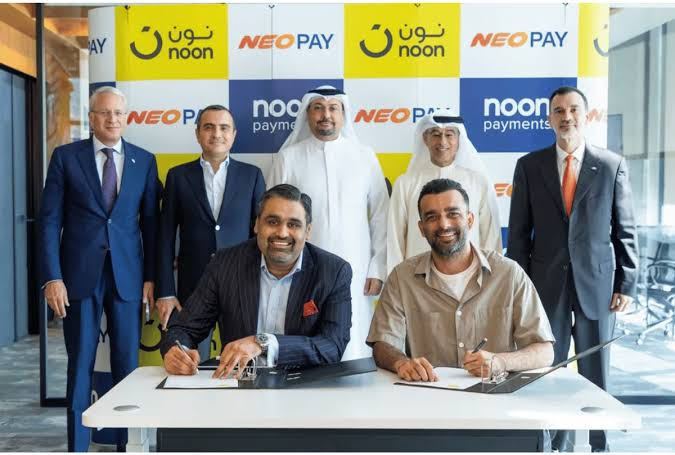
Dubai-based NEOPAY has signed a definitive agreement to acquire a 65% controlling stake in noon payments, the payments arm of regional e-commerce group noon. The transaction value was not disclosed and remains subject to regulatory and competition approval. The deal combines NEOPAY’s merchant-acquiring and in-store payments infrastructure with noon payments’ online gateway and merchant network, giving NEOPAY a route into Egypt, one of the region’s largest digital-commerce and payments markets.
The signal: Gulf fintechs are increasingly entering African markets through acquisitions and existing merchant networks rather than building local operations from scratch. The next question is whether NEOPAY uses Egypt as a wider entry point into Africa.
Bloomberg Completes Canoe Intelligence Acquisition
Bloomberg has completed its acquisition of Canoe Intelligence, an AI-powered platform that automates the collection, organisation and analysis of private-market data. The acquisition strengthens Bloomberg’s offering to asset managers, private-equity firms and institutional investors as private markets become increasingly data-intensive.
The signal: Financial-information companies are acquiring AI capabilities that turn fragmented documents and alternative data into structured investment intelligence. That capability could become increasingly relevant as Africa’s venture, private-credit and infrastructure markets deepen.
IBM Acquires Logiq Consulting
IBM has announced the acquisition of Logiq Consulting, a UK-based firm focused on secure digital transformation and cybersecurity. The transaction fits IBM’s broader strategy of combining consulting expertise with secure cloud, data and AI deployment, particularly for organisations operating complex legacy systems.
The signal: AI implementation capability is becoming as valuable as the software itself. The companies that can help regulated organisations deploy AI safely are becoming strategic acquisition targets.
Algolia Acquires Velou to Strengthen AI Commerce
Algolia has announced the acquisition of Velou, which specialises in multimodal AI for product intelligence, search and recommendations. Velou serves more than 50 retail and premium-brand enterprises. Its technology extracts structured meaning from product text and images, improving search, recommendations and AI-agent interactions.
The signal: E-commerce M&A is moving deeper into the product-data layer. For African marketplaces and retailers, better product intelligence could help solve persistent challenges around inconsistent catalogues, informal product descriptions, multiple languages and image-heavy commerce.
AMD Bets on Physical AI With World Labs
AMD is set to acquire World Labs, the AI company founded by researcher Fei-Fei Li, in an all-stock transaction valued at approximately $8.2 billion. World Labs focuses on physical AI systems capable of understanding and simulating the real world. For AMD, the deal provides a stronger foothold in advanced AI research and applications built around spatial understanding.
The signal: Chip companies are moving further upstream into AI models and research as hardware performance becomes increasingly tied to the software ecosystems built around it.
Anthropic and Broadcom Put Infrastructure at the Centre
Not an acquisition, but one of the week’s most important strategic technology deals is the financing relationship between Anthropic, Broadcom and Google. Broadcom is providing up to $42 billion in financing, while Anthropic has committed approximately $125.2 billion over five years for TPU computing capacity. The structure may also include convertible notes that could later convert into Anthropic shares.
The signal: Frontier AI competition is increasingly being shaped by long-term supply agreements, infrastructure financing, debt, warrants and strategic stakes, not just traditional venture funding. For the next generation of AI companies, access to compute is becoming a strategic asset in its own right.

Africa’s AI Opportunity Is a Capability Opportunity
Africa’s AI gap is increasingly about data, compute, talent, finance and governance, not just models. Local companies have an opportunity to build AI that understands African languages, payments, commerce, agriculture, logistics and public services.
The signal: The advantage may come from making AI work better for African realities.
Lagos Keeps Strengthening Its Ecosystem
Lagos remains a major hub for fintech, digital commerce and creative technology, while events like Blockfest Africa and Moonshot are bringing more AI, capital and policy conversations into the city.
The challenge is turning ecosystem density into deeper local ownership, infrastructure and scalable companies.
Capital Is Becoming More Than a Cheque
Askya’s AI Growth Platform will support 10 African AI startups with coaching, cloud and GPU access, plus potential investment of up to $200,000.
The signal: Early-stage AI companies increasingly need compute, customers and technical support alongside capital.
Compute Is the Next Bottleneck
Africa’s AI ambitions depend on affordable GPUs, reliable power, cloud infrastructure, quality datasets and stronger connectivity. New data-centre and GPU-access initiatives are important, but demand must grow alongside infrastructure investment.
The signal: The countries that connect compute, power, data and customers will be better positioned to capture AI value.
The Creative Economy Could Be a Tech Advantage
Gaming, music, film and creator platforms give African technology companies something difficult to replicate: cultural distribution. The traction around Lagos Run and Lagos Life shows the potential of locally specific digital products.
The bigger question is who owns the audiences, data and intellectual property created around them.
The Last Word
That’s a wrap on Issue 010.
This week’s stories point to a technology ecosystem moving beyond experimentation. AI adoption is producing real returns, but scaling still depends on infrastructure, governance, talent and integration. At the same time, capital is moving deeper into compute, security and the systems needed to make AI work at scale.
Across Africa, the opportunity is becoming clearer. The companies that can solve for local markets, build around Africa’s unique data and cultural context, and own more of the infrastructure and distribution will have an important advantage.
Thank you for reading and for being part of the first ten issues of The Ecosystem Brief. We’re building this for the people creating, funding, shaping and following Africa’s technology ecosystem, and your feedback will help us make it better.
Until next Tuesday,
— The Ecosystem Brief
Everything that matters. Nothing that doesn’t.
Never miss an issue
Join the founders, investors, and operators who start their Tuesday with The Ecosystem Brief.
Subscribe on the homepage →