African AI Is Getting Local and Capital Is Following
Welcome to Issue 011 of The Ecosystem Brief.
Last week, we hit our first major milestone: ten editions of tracking the AI, companies, capital, policies and ideas shaping Africa’s technology ecosystem. Now, we’re getting into the next ten.
As we keep building, we’re still taking your feedback. We want to know what’s working, what could be better, and what you’d like to see more of. Whether it’s a section you look forward to, a topic we should cover, or something you think we’re missing, we want to hear from you.
Your feedback will help shape what The Ecosystem Brief becomes next.
Now, let’s get into this week’s Brief.
Vambo AI Builds an Open-Weight Model for African Languages
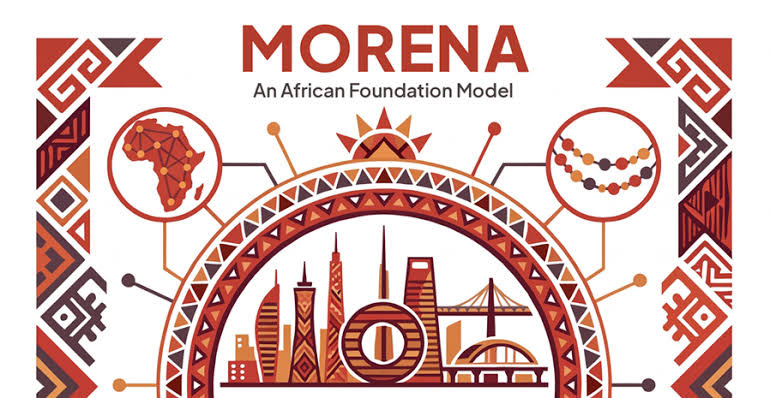
South African startup Vambo AI has released MORENA, an open-weight, 1.5-billion-parameter language model trained from scratch for 12 African languages, alongside English and French. Unlike adapting an existing Western model, MORENA was built around African linguistic needs from the ground up. Its release adds to the push for AI systems that better reflect the continent’s languages and local contexts.
African Experts Want a Bigger Role in Writing AI Rules
At the Summit on People-Centred Technologies in Africa in Nairobi on October 12, African technology and policy experts warned that AI rules designed elsewhere could overlook African languages, political realities and development priorities. An African Union AI advisory group representative estimated that half or fewer of African countries have AI regulations. African leaders have also called for greater participation in global AI standard-setting, arguing that governments and businesses are adopting foreign AI systems without always having the capacity to assess their safety for local populations.
Regulators Connect AI, Cybersecurity and Data Protection
African regulators met in Nairobi from October 5–9 for the iPRIS programme, treating AI, cybersecurity, cloud infrastructure, digital platforms, data protection and online safety as interconnected policy issues. Rules covering non-deposit-taking credit providers also require lenders using AI for credit decisions to address transparency, bias, accuracy, privacy and security, while maintaining human oversight.
Google Cloud Deepens Its AI Push Across Africa
On October 13, Google Cloud announced five AI and digital infrastructure initiatives for Africa, including efforts to bring African entrepreneurs and Google researchers together to develop AI-native startups. The move points towards deeper involvement in local product development, beyond traditional accelerator programmes. For founders, access to technical expertise and infrastructure could help turn promising ideas into viable products.
The Signal
African AI is advancing on three fronts: locally built models, stronger governance and deeper infrastructure partnerships. The opportunity is to turn these developments into products that work for African users and businesses. The challenge is ensuring local builders have the talent, computing access, regulatory influence and ownership to capture more of the value.

African startups raised $3.3 billion across 223 disclosed rounds as of October 10, surpassing the $2.1 billion recorded through August. Nigeria attracted $254 million in H1 2026, its strongest fundraising performance in almost four years, while Kenya led Africa’s startup investment market in 2025.
Notable rounds: Vatar raised $500,000 at a $10 million valuation following the viral success of Lagos Life. Zimbabwe’s Ocular AI secured $2 million in pre-seed funding, while Kenya’s aerospace startup Satlyt raised $8 million. Agritech also attracted capital, with Tomato Jos raising $2 million and Farm to Feed securing $171,000.
On the fund side, Ventures Platform closed its second fund at $84 million, exceeding its original target, while Endeavor Catalyst closed a $320 million fifth fund. Meanwhile, capital continues flowing into infrastructure, including Nigeria’s $300 million distributed solar and mini-grid fund and debt financing for Prado Power’s solar projects.
The signal: Funding is expanding beyond established fintech categories into gaming, AI, aerospace and energy. Vatar’s raise is a notable sign that viral African consumer products can attract investor attention, while the continued growth of local venture funds remains crucial to financing startups beyond the earliest stages.
African Union Pushes for Harmonised AI Rules
The African Union is consulting on a common AI governance framework, with ministers and experts due to meet in Libreville from October 26–29 to discuss draft guidelines and financing. The approach favours flexible frameworks, standards and codes of practice over rigid binding laws.
Why it matters: A common baseline could make it easier for AI companies to expand across African markets without navigating entirely different rules in each country.
Chad Advances Its National AI Strategy
Chad began reviewing its 2026–2030 National AI Strategy after validating its National Data Governance Strategy. The process will establish priorities for AI adoption alongside rules for managing, sharing and protecting data.
Why it matters: Emerging markets in Francophone Africa could offer opportunities for early movers, but success will depend on local partnerships, infrastructure and access to digital talent.
World Bank Warns of Africa’s AI Readiness Gap
The World Bank’s October Africa Economic Update identifies Nigeria, Kenya and South Africa as leading centres of AI activity, but warns that unreliable electricity, limited connectivity, skills shortages and poor-quality data could constrain adoption. Agriculture, education, healthcare, finance and logistics remain key areas for practical AI applications.
Why it matters: Africa’s near-term opportunity lies in adapting affordable AI to local challenges while building the foundations for adoption and productive job creation.
African startup exits reached 34 in the first nine months of 2026, putting the market on course to approach last year’s record of 48. This week’s deals point to continued consolidation, particularly in fintech, payments and merchant software.
Flutterwave acquired open-banking startup Mono in an all-stock transaction reportedly valued at $25 million to $40 million. Meanwhile, South Africa’s Araxi acquired payments company Pay@ for $62 million, and Moniepoint acquired restaurant-management platform Orda Africa for an undisclosed sum, expanding further into merchant software.
Elsewhere, Kenya’s M-KOPA acquired Finnish phone-locking firm KilpiTek for $8 million, strengthening its device-financing and credit-risk capabilities. In Ghana, agritech startup Complete Farmer delivered a 3.5x return to early investor Five35 Ventures.
Beyond acquisitions, Airbus, Wits University and ISAE-SUPAERO signed a partnership to strengthen aerospace training and manufacturing capabilities in South Africa.
The signal: African M&A is increasingly about acquiring capabilities, not just market share. Payments infrastructure, open banking and vertical software are becoming strategic assets, while the exit market remains dominated by acquisitions and often undisclosed deal values. Founders and investors should increasingly consider strategic buyers as a realistic route to liquidity.

Have an idea for solving a mining or mineral exploration challenge? The UNDP-backed programme supports students, researchers, engineers and early-stage entrepreneurs in Botswana, Liberia, Malawi, Nigeria, Zambia and Zimbabwe. Applicants do not need a finished product or registered startup. The programme helps participants validate ideas, develop prototypes and connect with technical experts and industry stakeholders.
Apply now →Halcyon is inviting early-stage, impact-driven ventures across Sub-Saharan Africa working on agriculture and food security. Selected ventures receive a $10,000 equity-free stipend, $10,000 in AWS credits, expert guidance and access to a hybrid programme with residencies in Accra and Nairobi. Applicants should have a working product and evidence of customer traction, such as revenue or paid pilots.
Apply now →Building a platform that helps people find work, earn income or grow a business in Mombasa? Jobtech Alliance is inviting founders to join its local ecosystem. Selected platforms that fit its investment thesis may access up to $20,000 and technical support, alongside a network of more than 600 founders across Africa. No application fee or equity is required. Eligibility: startups already operating in Mombasa or serious about expanding there before July 2027.
Apply now →This pan-African programme supports women founders aged 18–35 building tech-enabled businesses. Applicants need an MVP in market and at least $500 in monthly revenue sustained for six months. The programme offers 12 weeks of training, a monthly stipend, six months of mentorship and an opportunity to pitch for $5,000 in startup capital after completing the programme.
Apply now →The World Innovation Summit for Education is seeking for-profit edtech startups from around the world, including Africa, that have moved beyond the MVP stage and demonstrated traction. Selected ventures receive $50,000 worth of support, including expert mentorship, investor connections, business development guidance and international visibility. Solutions may target K–12 education, higher education or professional development.
Apply now →The Last Word
You may have noticed that this week’s Brief is a little shorter. We’ve been listening to your feedback and making changes to keep The Ecosystem Brief focused, useful, and easier to get through without losing the stories and insights that matter.
We’re still learning what works best for you, and we’d love to hear more. What should we keep doing? What could be better? Are there topics, sections, or opportunities you’d like us to cover more often?
Help us shape the next edition. Take a couple of minutes to fill out our feedback form and tell us what you think.
Thank you for reading, sharing your thoughts, and being part of this growing community. We’re building The Ecosystem Brief with you in mind, and your feedback helps us get better every week.
Until next Tuesday,
— The Ecosystem Brief
Everything that matters. Nothing that doesn’t.
Never miss an issue
Join the founders, investors, and operators who start their Tuesday with The Ecosystem Brief.
Subscribe on the homepage →