AI Is Creating Africa's Next Security Market
Welcome to Issue 003 of The Ecosystem Brief.
Last week, we looked at a clear shift happening across Africa's tech ecosystem: capital is moving toward infrastructure, AI is becoming more embedded in real businesses, and regulation is beginning to catch up with adoption. We also looked at Africa's biggest tech raise of 2026 so far.
This week, the story continues.
From new AI models and African-language infrastructure to fresh capital, regulatory moves, acquisitions and opportunities for founders, the ecosystem is moving quickly — and the signals are becoming harder to ignore.
So, welcome back, here's what you need to know this week.

AI-Powered Cybercrime Is Rising Across Africa
INTERPOL reports that AI is now involved in 55% of reported cybercrime across Africa, up from 28% in 2024. Losses more than doubled to $484 million, driven by AI-enabled phishing, automated fraud and deepfake scams.
Why it matters: The AI race is no longer only about adoption and innovation. African businesses are also becoming targets of increasingly sophisticated AI-powered attacks, making AI security a core business priority.
Kenya Moves Closer to Its AI Rulebook
Kenya has extended public consultation on its Draft AI and Other Emerging Technologies Policy, 2026, with recommendations calling for stronger safeguards around high-risk AI, human rights, worker protection and environmental accountability.
Why it matters: Kenya is moving from AI strategy toward governance. The final framework could influence how high-risk AI is developed and deployed across East Africa.
SADC Wants Shared Data Rules for AI
Southern African countries are working towards greater alignment on regional data governance, recognizing that fragmented national rules can become a barrier to AI development and cross-border data use.
Why it matters: Harmonised rules could make it easier for AI companies to operate across Southern Africa while increasing pressure around data localisation and governance.
Africa Gets Its First AI-Focused Pre-Seed Fund
South African startup Tennsa has become the first portfolio company of Oakvale Invest, an AI-focused pre-seed fund, receiving ZAR 1 million to develop its SME business intelligence platform.
Why it matters: Specialized AI capital is beginning to emerge alongside the startups themselves. That suggests AI is becoming a distinct investment category in Africa — not simply another feature within a generalist VC portfolio.
The Signal
Africa's AI ecosystem is moving beyond experimentation. Security is becoming critical, regulation is catching up, and specialized capital is emerging. The next phase of the market will be defined not just by who can build with AI, but by who can build securely, compliantly and with the right capital behind them.

Africa's capital story is increasingly moving toward specialised technology, infrastructure and businesses with clear institutional demand. Nigerian autonomous systems company Terra Industries has closed a $52 million seed round, making it one of the largest seed raises by an African startup this year. The company had previously raised $11.75 million and a $22 million bridge round, bringing total funding to $52 million. The latest capital will support expanded manufacturing capacity at its Pax-2 facility in Ghana, while the company establishes its first international office in London, alongside planned operations in San Francisco and Washington, DC.
The size of the round is notable, but so is the business behind it. Terra already has multi-million-dollar contracts with African governments and critical infrastructure operators, with its autonomous systems being deployed for the monitoring and protection of high-value assets. Its Ghana facility is expected to produce up to 50,000 systems annually once fully operational, giving the company a manufacturing base from which to expand beyond Africa.
Elsewhere, Africa50 secured $50 million from international financial institutions for climate-resilient projects, adding to the growing pool of development capital targeting renewable energy, green infrastructure and climate adaptation across the continent.
Digital infrastructure is also attracting larger institutional cheques. Monty Mobile raised $12 million from BluePeak Private Capital to expand its messaging and communications infrastructure across African markets, reinforcing the case for B2B platforms that sit underneath the digital economy rather than directly competing for consumer attention. At the early stage, Oakvale Invest backed South African AI startup Tennsa with ZAR 1 million, its first portfolio investment from an AI-focused pre-seed strategy.
The signal: Capital is becoming more specialised — and increasingly tied to infrastructure, strategic technology and demonstrated commercial demand. Terra's raise is especially significant because it shows investors willing to back an African company building physical technology, manufacturing locally and selling into institutional markets. The next wave of major African funding may increasingly come from companies solving strategic infrastructure problems, not just building software.
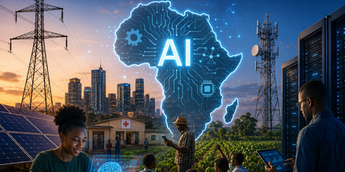
Africa's AI Security Problem: The Next Billion-Dollar Opportunity?
Africa's AI conversation is shifting from adoption to defence. As artificial intelligence becomes embedded in fintech, banking, healthcare, government and digital commerce, AI-powered attacks are emerging as a major commercial and institutional risk. The question for investors and founders is whether this growing threat could create one of Africa's next significant technology markets: AI-native cybersecurity and fraud prevention.
The Signal
INTERPOL's African Cyberthreat Assessment 2026, released in early August, reported that artificial intelligence is now involved in 55% of reported cybercrimes across Africa, up from 28% in 2024. Reported losses more than doubled from $192 million to $484 million in one year.
The assessment identifies AI-generated phishing, automated fraud rings, deepfake-enabled scams, and synthetic identity creation as the primary vectors. This is not a future threat — it is happening now, with African businesses and consumers as the targets.
How AI is Changing Cybercrime in Africa
The attack surface is expanding faster than defensive capabilities. AI-generated phishing campaigns are becoming indistinguishable from legitimate communications, particularly in markets where digital literacy is still developing. Automated fraud rings use machine learning to test thousands of transaction patterns per minute, identifying vulnerabilities in payment systems faster than human analysts can respond.
Deepfake technology is enabling voice impersonation attacks targeting bank customers and corporate executives. Synthetic identity creation — using AI to generate plausible but fake identities — is undermining know-your-customer (KYC) processes that African fintechs and banks rely on for regulatory compliance. Automated social engineering attacks are exploiting WhatsApp, SMS, and social media platforms that serve as primary communication channels for African consumers.
For African fintech, mobile money, and digital commerce, the implications are severe. These sectors have driven Africa's digital transformation, but they were built for speed and inclusion, not security-first architectures. The rapid adoption of mobile money (GSMA reports over 700 million mobile money accounts across Africa) has created a massive attack surface that AI-enabled criminals are exploiting at scale.
Why Africa is Particularly Exposed
Several structural factors make Africa uniquely vulnerable to AI-enabled cybercrime. First, the continent's fintech and mobile money adoption has outpaced cybersecurity maturity. African consumers are transacting digitally at unprecedented rates, but the security infrastructure has not kept pace. Many fintechs prioritised user acquisition and transaction volume over security architecture, creating exploitable vulnerabilities.
Second, regulatory environments are fragmented. While Kenya is moving toward AI-specific regulation (the Draft Kenya Artificial Intelligence and Other Emerging Technologies Policy, 2026), most African countries lack comprehensive AI governance frameworks. This creates regulatory arbitrage opportunities for criminals and compliance challenges for legitimate businesses.
Third, digital identity gaps persist. Despite progress in national ID systems, many African countries still lack robust, verifiable digital identity infrastructure. This makes synthetic identity fraud particularly effective — criminals can create fake identities that pass basic KYC checks but are impossible to trace.
Fourth, large informal economies mean that many transactions occur outside formal banking channels, reducing visibility and making fraud detection harder. Finally, consumer awareness of AI-enabled threats remains low in many markets, making social engineering attacks more effective.
The Economic Opportunity
Rising AI-enabled attacks are creating demand for AI-native security solutions. The market opportunity spans several categories:
- AI-native fraud detection: Traditional rule-based fraud systems cannot keep pace with AI-enabled attacks. African fintechs and banks need adversarial AI systems that can detect and respond to AI-generated threats in real time.
- Identity verification: As synthetic identity fraud grows, demand for robust identity verification (biometric, behavioural, document-based) will increase.
- Deepfake detection: Voice and video deepfakes are becoming sophisticated enough to bypass existing authentication systems.
- Cybersecurity automation: African enterprises lack the security talent to manually monitor and respond to threats. Automated SOCs powered by AI are becoming essential.
- Adversarial AI testing: As African companies deploy AI systems, they need to test those systems against adversarial attacks — a nascent but growing market.
- Transaction monitoring: Real-time monitoring of transactions for AI-enabled fraud patterns is becoming table stakes for fintechs and banks.
- AI security infrastructure: Beyond point solutions, there is demand for security infrastructure designed specifically for AI systems — model monitoring, data poisoning detection, and adversarial robustness testing.
Are African Startups Positioned to Win?
Several African startups are already addressing pieces of this market, though the ecosystem is still nascent. Kuda Bank (Nigeria) and TymeBank (South Africa) have invested heavily in AI-powered fraud detection, though these are internal capabilities rather than commercial products. Carbon (Nigeria) and Branch (Kenya) have built sophisticated credit scoring and fraud detection systems, but again, these are proprietary.
On the cybersecurity side, Terminus Technologies (Nigeria) provides cybersecurity services to African enterprises, though it is not AI-native. Swifta (Nigeria) and SecureClaw (Nigeria) offer cybersecurity consulting and managed security services, but the market for AI-native security startups remains underdeveloped.
This gap represents both a risk and an opportunity. African enterprises are currently reliant on global security vendors (Palo Alto Networks, CrowdStrike, SentinelOne) that may not understand African threat landscapes, languages, or regulatory environments. African startups that can build AI-native security solutions for local contexts could capture significant market share.
What is Missing from the Ecosystem?
Several critical gaps must be addressed for Africa's AI security market to mature:
- Talent: Africa lacks security researchers with expertise in adversarial AI, machine learning security, and AI-enabled threat detection.
- Data: AI security systems require large, labelled datasets of African cyber threats that do not exist at scale.
- Compute: Training adversarial AI models requires significant compute resources, which may be deprioritised relative to revenue-generating AI products.
- Capital: AI security startups require longer development cycles and higher capital intensity than typical African tech startups.
- Enterprise spending: African enterprises spend significantly less on cybersecurity than their global counterparts.
- Regulation: Africa's fragmented regulatory environment means compliance-driven security demand is uneven across markets.
- Security infrastructure: Africa lacks foundational security infrastructure — threat intelligence sharing, incident response coordination, security research institutions.
What This Means for Investors
AI security could become a distinct investment category rather than simply a feature inside fintech or cybersecurity companies. The thesis rests on three pillars: AI-enabled attacks are a structural problem, not a cyclical one; AI security requires specialised expertise that generalist cybersecurity investors may not possess; and African AI security startups could serve not just African markets but also other emerging markets facing similar threats — the playbook developed in Africa could be exportable.
However, investors should be realistic about timelines. AI security companies take longer to build, require more capital, and have longer sales cycles than typical African tech startups. Returns will be slower but potentially more durable.
What This Means for Founders
Security should be designed into AI products from the beginning, not treated as a later compliance layer. African AI founders who build security-first architectures will have competitive advantages in enterprise sales, regulatory compliance, and customer trust.
This does not mean every AI startup must become a security company. It means that security considerations — adversarial robustness, data poisoning defence, model monitoring — should be part of product design from day one.
Conclusion: Is This a Billion-Dollar Opportunity?
The evidence suggests yes, but with caveats. INTERPOL's data (55% of cybercrime now AI-enabled, losses doubling to $484 million) establishes the threat. Africa's rapid digitisation (700 million mobile money accounts, booming fintech sector) establishes the attack surface. The structural gaps (talent, data, compute, capital, enterprise spending) establish the market need.
However, realising this opportunity requires solving the ecosystem gaps. African startups cannot build AI security companies in isolation — they need talent pipelines, datasets, compute access, patient capital, and regulatory frameworks that incentivise security investment.
Africa may not lead the global race to build frontier AI models, but the continent could build important AI security businesses designed around its own digital realities. The question is not whether the opportunity exists — it does. The question is whether African founders, investors, and policymakers can build the ecosystem to capture it.
The next 18–24 months will be decisive. If African AI security startups can demonstrate product-market fit, attract patient capital, and build defensible technology, this could become one of Africa's next significant technology markets. If not, African enterprises will remain dependent on global vendors that may not understand African threats.
The opportunity is real. The execution is the challenge.
Nigeria — CBN Opens Sandbox for Stablecoins & Data-Driven Finance
The CBN has opened Cohort 2 of its Regulatory Sandbox, with dedicated tracks for virtual assets, stablecoins, payments, custody and data-enabled financial services.
Why it matters: Nigeria is signalling that crypto and data-driven finance can operate within a supervised framework, giving founders a clearer route to test new products while regulators watch the market closely.
Kenya — Draft AI Policy Moves to the Final Stage
Kenya's public consultation on its Draft AI and Other Emerging Technologies Policy, 2026 has closed, with the final framework expected later this year. Proposals include mandatory registration for high-risk AI, an AI Safety Institute and a public AI registry.
Why it matters: For founders deploying AI in areas such as credit, healthcare and hiring, governance is moving from a future concern to a near-term operating requirement.
SADC — Regional Data Rules Are Taking Shape
SADC countries are working toward harmonising data governance to support regional AI development and reduce fragmentation across member states.
Why it matters: A more unified framework could make cross-border AI deployment easier while increasing pressure around data localisation, regional infrastructure and compliance. For investors, regional data infrastructure is becoming an increasingly important part of the AI thesis.
FirstFounders Build-to-Transfer delivers a fully operational AI company — product, embedded team, legal entity and go-to-market engine — then hands you complete ownership, with a trained team in place to run it from day one.
Book a Discovery Call →NVIDIA's $500B AI Infrastructure Bet Could Widen Africa's Compute Gap
NVIDIA has partnered with major global investors including BlackRock, Apollo, Blackstone, Brookfield, Goldman Sachs and KKR to mobilise more than $500 billion in third-party capital for AI infrastructure. The signal is bigger than NVIDIA. AI compute is becoming an investable infrastructure asset class similar to energy, telecoms and real estate.
For Africa, the timing matters. The continent represents roughly 18–19% of the global population but has less than 1% of global compute capacity. As capital floods into AI infrastructure elsewhere, Africa risks falling further behind unless its own institutional investors, DFIs and governments build financing vehicles for data centres, AI factories and shared compute.
Why it matters: The next AI divide may not be about who has the best models. It may be about who owns the infrastructure those models run on. Africa can either participate in this infrastructure buildout, or remain a customer, paying foreign providers for compute rather than owning the capacity itself.
The signal to watch: Whether NVIDIA and its financing partners begin structuring African infrastructure deals with telecoms, sovereign funds, DFIs or regional data-centre operators.
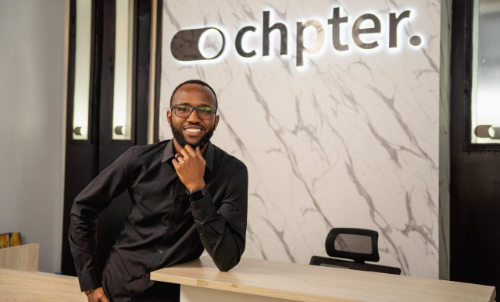
African M&A is increasingly becoming a growth strategy, not just an exit route. Kenyan fintech Cloud9 acquired Chpter in an all-stock deal, adding roughly 4,500 merchants to its business banking platform and marking its second acquisition in three months. The deal reinforces a growing buy-and-build strategy among African fintechs, where complementary platforms are being acquired and folded into larger financial ecosystems.
In banking, South Africa's Nedbank made an $855 million offer for a controlling stake in Kenya's NCBA Group, highlighting the accelerating consolidation of financial services across borders.
Meanwhile, Dubai-based Advanta Seeds is set to acquire Egypt's Misr Hytech for about $110 million, adding another major cross-regional transaction in African agriculture and demonstrating that strategic buyers are increasingly targeting specialised assets beyond traditional technology.
The signal: M&A is becoming a more important route to scale across African markets. Fintech, banking and agtech companies with strategic capabilities, customers or infrastructure are increasingly attractive to larger players looking to expand faster than organic growth allows.

GoMed Nigeria takes digital self-care to university students
Healthtech startup GoMed Nigeria has launched a digital self-care platform with UNFPA and the Lagos State Government, creating a public-private model for expanding access to sexual and reproductive healthcare.
The signal: Partnerships with governments and development institutions can give healthtech companies distribution and credibility that are difficult to build alone.
Clea expands into international supplier payments
Nigerian fintech Clea has launched a vendor-payments product enabling African SMEs to pay overseas suppliers directly through its platform.
The signal: Fintechs are moving deeper into cross-border trade infrastructure, competing with banks on speed, cost and transparency.
Oakvale backs its first AI startup
South African AI company Tennsa has become the first portfolio company of Oakvale Invest, an AI-focused pre-seed fund, receiving funding to develop its SME intelligence platform.
The signal: Dedicated AI capital is beginning to emerge in Africa, giving early-stage founders more specialised funding options.
VezoPay's payment ring hits a banking bottleneck
South African startup VezoPay has launched a contactless payment ring with four banking partners, but 35,000 people remain on its waiting list because their banks are not yet supported.
The signal: In African fintech, the biggest barrier to innovation can sometimes be integration — not the technology itself.
Egypt's UMAMI launches an AI-powered Learning OS
UMAMI E-Learning Solutions has introduced an AI-powered learning operating system aimed at governments and large institutions, backed by a $1 million+ investment plan.
The signal: African edtech is expanding beyond consumer learning into enterprise and government infrastructure.
A three-month hybrid accelerator for growth-stage, AI-driven South African startups, offering up to R1 million in equity-free funding, Google Cloud credits, AI tools and technical mentorship. Deadline: 28 August 2026.
Apply now →$20,000–$50,000 in equity funding, mentorship, and investor access for African startups building in creative tech, gaming, media, and digital content. Deadline: 28 August 2026.
Apply now →FAO and Smart Africa invite AI, IoT, and climate-tech startups tackling food security and agriculture to apply for equity-free grants, technical support, and pilot opportunities. Deadline: 31 August 2026.
Apply now →$300,000–$2.4 million in debt financing for established agribusinesses, agri-fintech companies, and supply chain operators across Sub-Saharan Africa, alongside technical assistance for growth. Deadline: 31 August 2026.
Apply now →A fully funded Africa Fellowship offering a six-month placement in Washington, D.C., or selected African offices for eligible PhD candidates and recent graduates. Deadline: 25 August 2026.
Apply now →An equity-free accelerator supporting growth-stage technology startups across MENA, including Egypt, Morocco and Tunisia, with Google Cloud credits, AI tools, technical mentorship and investor access. Deadline: 31 August 2026.
Apply now →A pan-African programme supporting early-stage startups from idea to MVP through structured training, mentorship, investor access and opportunities to pitch for funding. Applications are rolling, with the next cohort beginning in September 2026.
Apply now →Africa's AI ecosystem is entering a more consequential phase.
This week, we saw the risks of AI become clearer, regulation become more concrete, capital move toward strategic infrastructure, and investors begin backing more specialised AI businesses. At the same time, founders are finding new opportunities across climate, payments, digital infrastructure, defence technology and AI.
The common thread is simple: the ecosystem is becoming more mature, but also more demanding.
Building a great product is no longer enough. The companies that stand out will be the ones that can navigate regulation, secure capital, build real infrastructure, and solve problems that matter at scale.
That is the signal we'll continue to track for you every Tuesday.
Thank you for reading Issue 003 of The Ecosystem Brief.
Until next Tuesday,
— The Ecosystem Brief
Never miss an issue
Join the founders, investors, and operators who start their Tuesday with The Ecosystem Brief.
Subscribe on the homepage →