Africa Could Become a Consumer of AI, Not a Producer
Welcome to Issue 004 of The Ecosystem Brief.
Last week, we looked at an AI ecosystem entering a more consequential phase. AI-powered cybercrime is rising, regulation is catching up, specialised AI capital is emerging, and Terra Industries' $52 million raise showed growing investor appetite for strategic technology and infrastructure.
The bigger question now is what happens as AI moves deeper into the real economy.
This week, we're looking at how AI is being deployed beyond the hype — across businesses, infrastructure, financial services and other sectors where adoption is beginning to create measurable commercial value.
As always, we've pulled together the developments, capital movements, policy shifts, opportunities and signals worth your attention.
Welcome to Issue 004. Let's get into it.
AI Venture Studios Are Emerging
IAIG (Inevitable AI Group) has raised $6 million in pre-seed funding, led by Aleph, to build AI-native SaaS companies through a venture-studio model. The studio has already launched five ventures and plans to build dozens more.
Why it matters: AI venture studios could become an important alternative to traditional startup formation, pooling talent, infrastructure and capital across multiple AI companies.
Meta Expands Its AI Bet in Nigeria

Meta and Nigeria's Federal Ministry of Communications, Innovation and Digital Economy have launched AI Academy Nigeria, combining developer training with a startup pitchathon. Winners can receive $5,000 in cash prizes and access to Meta's global AI ecosystem.
Why it matters: Hyperscalers are increasingly investing in Africa's developer and founder pipeline, not just selling AI products to the continent.
South Africa Reopens the AI Policy Conversation
The Western Cape is launching Activate SA, with its first AI Summit focused on governance, infrastructure investment and sovereign AI following the withdrawal of South Africa's draft national AI policy.
Why it matters: The policy debate is shifting from simply encouraging AI adoption to asking who controls the infrastructure, data and systems that underpin it.
Microsoft Warns Africa Could Become an AI Consumer
Microsoft has warned that Africa risks becoming primarily a consumer rather than a creator of AI, citing infrastructure and adoption gaps as the company expands its own AI infrastructure and skills investments on the continent.
Why it matters: The warning reinforces a theme running through Africa's AI market: without more compute, data-centre capacity and technical talent, the continent risks capturing only a fraction of the value created by AI.
The Signal
Africa's AI race is moving up the stack.
The focus is no longer just on who is building AI applications. Talent, capital, governance and infrastructure are becoming the real competitive battlegrounds.

Capital is continuing to follow infrastructure, practical enterprise tools and regional growth. South African workforce platform Jem raised $8.4 million in Series A, led by Quona Capital, to expand its WhatsApp-based platform for deskless workers. The raise reinforces the opportunity in building enterprise software around tools workers already use rather than forcing adoption of another standalone application.
At the infrastructure end, Genser Energy secured a $529 million debt package to expand gas and power infrastructure in Ghana and into Côte d'Ivoire, highlighting continued institutional appetite for proven energy assets in West Africa.
Meanwhile, AfDB and Italy's CDP approved $35 million for RMBV North Africa Fund III, providing growth capital for SMEs and businesses across Morocco, Tunisia, Egypt and Algeria.
The signal: Capital is increasingly moving toward businesses solving real infrastructure and distribution problems — from energy and workforce management to regional SME growth. The market may be more selective, but there is still significant capital available for companies with clear demand, durable infrastructure and credible paths to scale.
The Venture Studio Model in Africa: Why It's Gaining Traction (and Whether It Works)
When IAIG (Inevitable AI Group) closed a $6 million pre-seed round in August 2026 to launch dozens of AI-native SaaS ventures, it marked a quiet but significant shift in how African startups are being built. IAIG is not a traditional venture capital firm. It is a venture studio — a company that builds multiple startups in parallel, sharing infrastructure, talent, and go-to-market resources.
The venture studio model is not new globally. Studios like Rocket Internet (Germany), Science Inc. (US), and eFounders (France) have built billion-dollar companies using this approach. But in Africa, the model is only now gaining serious traction — and the question for founders and investors is whether it works in African markets.
What is a Venture Studio?
A venture studio differs from a venture capital firm, accelerator, or incubator in fundamental ways. Venture capital firms invest in existing startups founded by external teams — founders own and operate the company. Accelerators (like Y Combinator, MEST, CcHUB) run time-bound programmes (3–6 months) offering mentorship and small capital, and founders retain majority ownership.
Venture studios build companies from scratch. They typically:
- Generate ideas internally or recruit founders to existing concepts
- Provide co-founders, initial capital, office space, and operational support
- Take significant equity stakes (often 30–60% at inception)
- Build multiple companies in parallel, sharing resources across the portfolio
- Stay involved through Series A or beyond, not just at inception
The studio model trades founder equity for de-risked execution. Founders get infrastructure and support from day one; studios get meaningful ownership and control.
Why Studios Are Gaining Traction in Africa
First, early-stage funding is scarce. African startups raised $1.66 billion in the first seven months of 2026, but deal counts fell sharply. Early-stage (pre-seed and seed) funding is particularly tight. Studios provide capital and resources when traditional VC is scarce.
Second, founder support infrastructure is fragmented. African founders often lack access to experienced operators, technical talent, legal support, and go-to-market expertise. Studios centralise these resources, reducing the operational burden on founders.
Third, failure rates are high. African startup failure rates are estimated at 70–80% within the first five years. Studios de-risk execution by providing proven playbooks, shared resources, and operational support — though this also means founders give up more equity.
The African Studio Landscape
The African venture studio ecosystem is still nascent but growing. Established players include:
- Antler (global, active in South Africa, Kenya, Nigeria) runs entrepreneur matching and studio-style support for early-stage founders
- Entrepreneur First (UK, expanding to Africa) recruits individuals and matches them into co-founding teams with studio support
- Founders Factory Africa (pan-African) builds and scales startups in fintech, healthtech, and other sectors
- Rocket Internet (Germany) has not directly entered Africa, but its model has influenced African studios
Emerging players include:
- IAIG (AI-native SaaS studio, launched January 2026, $6M pre-seed) is building dozens of AI companies in parallel
- Renew Capital's Renew Venture Lab (pan-Africa) is a founder development programme with studio-like characteristics
- Various corporate-backed studios (banks, telcos, conglomerates) are spinning out fintech, healthtech, and enterprise startups
The common thread: studios are targeting sectors where Africa has clear demand (fintech, healthtech, enterprise SaaS, AI) but fragmented supply (few experienced founders, limited infrastructure).
Do Studio-Born Companies Perform Better?
The evidence is mixed — and data is scarce. Arguments for studios:
- Higher survival rates: global studies suggest studio-born companies have 2–3x higher survival rates than traditional startups.
- Faster time to market: shared resources accelerate product development and customer acquisition.
- Better founder matching: studios recruit and match co-founders based on complementary skills.
- Access to capital: studios often have committed capital or relationships with investors, reducing fundraising friction.
Arguments against studios:
- Equity dilution: founders give up 30–60% equity at inception, compared to 10–25% in traditional seed rounds.
- Less founder control: studios often retain board seats and veto rights, limiting founder autonomy.
- Studio dependency: founders may struggle to operate independently after graduation.
- Sector concentration: studios often focus on specific sectors, limiting diversification.
In Africa, the data is anecdotal. Some studio-born companies have achieved meaningful exits, but others have struggled to scale independently. The model's success likely depends on sector, studio quality, and founder fit.
What This Means for Founders
If you're considering a venture studio, ask yourself three questions. First, do you need infrastructure more than capital? If you lack technical co-founders, product expertise, or go-to-market support, a studio may be a better fit than traditional VC.
Second, are you comfortable with equity dilution? Studios typically take 30–60% equity at inception. If you want to retain majority ownership, look elsewhere.
Third, does the studio's sector focus align with your vision? Studios often specialise. If your startup fits the studio's thesis, you'll benefit from sector expertise. If not, you may be a poor fit.
What This Means for Investors
For investors, venture studios represent a new asset class — diversified exposure to startups with shared infrastructure and lower risk than single-company bets. The investment thesis: diversification across 10–20 parallel companies, proven operational playbooks, targeted sector exposure, and earlier access than traditional VC.
The risks: equity dilution reduces returns for follow-on investors, studio quality varies widely, and studio portfolios take longer to mature. For African investors, studios offer a way to de-risk early-stage investing — but only if the studio has proven operator expertise and a clear sector thesis.
The Verdict: Does the Model Work in Africa?
The venture studio model is gaining traction in Africa for good reasons — scarce early-stage funding, fragmented founder support, and high failure rates make the studio value proposition attractive. But the model is not a panacea. Studios work best when:
- The studio has proven operator expertise (not just capital)
- The sector focus aligns with market demand (fintech, healthtech, enterprise SaaS, AI)
- Founders understand and accept the equity trade-off
- Investors are patient and understand the longer liquidity timeline
For African founders, studios offer a viable alternative to traditional VC — but only if you understand the equity trade-off and choose a studio with relevant expertise. For African investors, studios offer diversified exposure to early-stage startups — but only if the studio has a proven track record.
The studio model is not replacing traditional VC in Africa. But it is carving out a meaningful niche — and that niche is growing.
Africa may not produce the next Rocket Internet. But it could produce studios that build meaningful companies in sectors where Africa has clear demand and fragmented supply. That is a thesis worth watching.
Nigeria — Cloud Policy Targets $750M in Investment
Nigeria has launched a National Digital Cloud Policy targeting $750 million in private investment over the next 24 months, with a focus on data centres, cloud infrastructure and AI compute. The policy introduces risk-based data sovereignty rather than blanket localisation.
Why it matters: Nigeria is positioning itself as a regional cloud hub, creating opportunities for data-centre, cloud and AI infrastructure players while increasing compliance requirements for businesses handling sensitive government and regulated data.
South Africa — SARB Tightens Scrutiny of Cross-Border Fintech
The South African Reserve Bank is investigating fintech group Kastelo over alleged exchange-control breaches involving approximately R4 billion ($215 million) in offshore transfers. The investigation comes as payment-system oversight moves further under SARB.
Why it matters: Cross-border fintech, remittance and virtual-asset businesses should expect greater scrutiny around capital flows, licensing and governance.
Nigeria — Virtual Asset Regulation Expands
Nigeria's SEC has admitted Blockchain.com, Pisi Payments and Yellow Card into its Accelerated Regulatory Incubation Programme, bringing participation to 14 virtual asset companies. This follows the CBN's newly opened sandbox for stablecoins, virtual assets and data-enabled financial services.
Why it matters: Nigeria is increasingly moving from regulating virtual assets through uncertainty to testing and supervising them through formal regulatory pathways. For founders, regulatory participation is becoming part of the product strategy.
FirstFounders Build-to-Transfer delivers a fully operational AI company — product, embedded team, legal entity and go-to-market engine — then hands you complete ownership, with a trained team in place to run it from day one.
Book a Discovery Call →Stripe's $7.5B OpenRouter Deal Signals a New AI Infrastructure Race
Stripe's reported $7.5 billion acquisition of OpenRouter points to a broader shift in AI: the infrastructure layer is becoming as strategically important as the models themselves.
OpenRouter helps businesses route AI workloads across different models based on cost, performance and availability. For Stripe, the deal extends its role from payments into the infrastructure supporting AI companies.
Why it matters for Africa: As global players consolidate AI infrastructure, African startups risk becoming increasingly dependent on foreign models, cloud providers and payment rails. At the same time, tools that reduce inference costs and enable model-agnostic architectures could become especially valuable in markets where compute remains expensive.
The signal: The next AI infrastructure opportunity may not be in building another frontier model. It may be in building the rails that make AI cheaper, more flexible and easier to deploy.
Africa's infrastructure story continues to attract strategic capital. South African fixed-wireless operator Comsol Networks has secured a multi-billion-rand debt and equity package to build a wholesale 5G network, allowing smaller operators to access network capacity without building their own infrastructure. The raise signals continued investor confidence in South Africa's connectivity market.
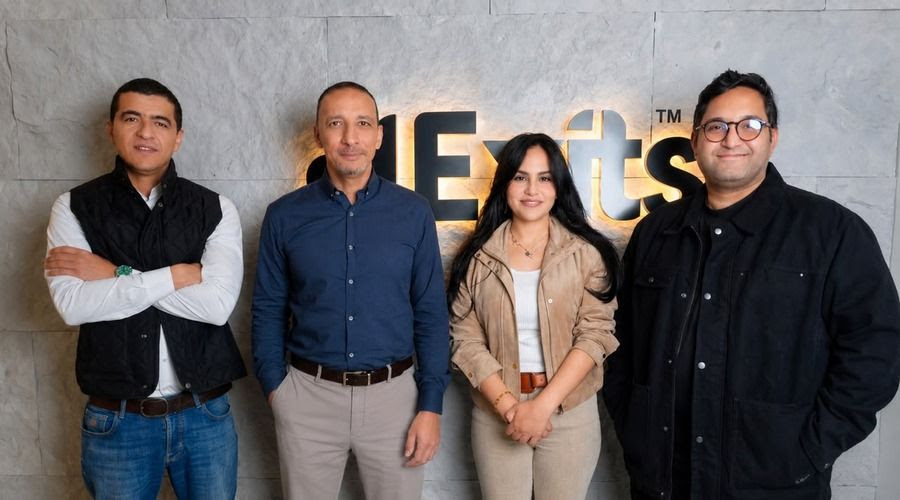
In Egypt, Exits MENA has agreed to acquire Avanz Capital Egypt in a multi-seven-figure transaction, expanding its capabilities across investment management, private equity and advisory services. The deal points to continued consolidation across the region's financial services ecosystem.
Meanwhile, Analytics Intelligence and Open Access Data Centres have formed a strategic partnership to deploy sovereign AI and cloud infrastructure across Africa, combining AI capabilities with locally hosted data-centre capacity.
The signal: The latest activity is less about headline exits and more about building and consolidating the infrastructure layer — 5G networks, financial platforms and sovereign AI capacity. As Africa's digital economy matures, strategic control of infrastructure is becoming an increasingly valuable asset.

Choplife moves into Itana
Mr Eazi's entertainment, media and technology company has moved its operations into Itana, Nigeria's digital free zone, citing its regulatory environment and simpler cross-border operations.
The signal: As African companies expand across fragmented markets, specialised digital jurisdictions are emerging as infrastructure for pan-African businesses.
MTN completes cloud migration for MoMo
MTN Group Fintech and Ericsson have completed the migration of MTN Mobile Money across Eswatini, Ghana, Rwanda and Uganda to a cloud-native architecture.
The signal: Africa's largest digital platforms are increasingly investing in infrastructure, scalability and reliability — not just customer growth.
AFC raises $431M through a digital bond
Africa Finance Corporation has raised approximately $431 million through a five-year digital bond to strengthen its capacity to finance infrastructure across Africa.
The signal: Digital capital markets are moving beyond experimentation, with large institutions beginning to use digital issuance for major infrastructure financing.
The bigger picture: Across the ecosystem, companies and institutions are building the infrastructure beneath Africa's digital economy — from corporate jurisdictions and cloud platforms to new forms of capital.
A three-month hybrid accelerator for growth-stage, AI-driven South African startups, offering up to R1 million in equity-free funding, Google Cloud credits, AI tools and technical mentorship. Deadline: 28 August 2026.
Apply now →$20,000–$50,000 in equity funding, mentorship, and investor access for African startups building in creative tech, gaming, media, and digital content. Deadline: 28 August 2026.
Apply now →FAO and Smart Africa invite AI, IoT, and climate-tech startups tackling food security and agriculture to apply for equity-free grants, technical support, and pilot opportunities. Deadline: 31 August 2026.
Apply now →$300,000–$2.4 million in debt financing for established agribusinesses, agri-fintech companies, and supply chain operators across Sub-Saharan Africa, alongside technical assistance for growth. Deadline: 31 August 2026.
Apply now →An equity-free accelerator supporting growth-stage technology startups across MENA, including Egypt, Morocco and Tunisia, with Google Cloud credits, AI tools, technical mentorship and investor access. Deadline: 31 August 2026.
Apply now →A global challenge for youth-led startups aged 18–30 building solutions across agrifood, climate, sustainability and social innovation. Selected ventures can receive up to $15,000 in funding and global exposure. Deadline: 31 August 2026.
Apply now →Africa's AI ecosystem is moving from experimentation to infrastructure.
This week, we saw capital flowing into AI, energy and digital infrastructure; governments tightening the rules around cloud, virtual assets and data; and major platforms investing in the systems that will support Africa's next phase of digital growth.
The opportunity is becoming clearer, but so are the requirements.
For founders, building for Africa means solving for infrastructure, regulation, distribution and capital — not just technology. For investors, the most interesting opportunities may increasingly sit beneath the applications: the platforms, infrastructure and systems that make the digital economy work.
We'll keep tracking those signals for you every Tuesday.
Thank you for reading Issue 004 of The Ecosystem Brief.
Until next week,
— The Ecosystem Brief
Never miss an issue
Join the founders, investors, and operators who start their Tuesday with The Ecosystem Brief.
Subscribe on the homepage →