Africa's AI Capital & Infrastructure Race
Welcome to Issue 002 of The Ecosystem Brief.
Last week, we looked at some of the signals shaping Africa's AI economy — from the growing fight against AI-generated "slop" to new funding for AI startups, the race to build African-language models, and the infrastructure challenges facing the continent.
This week, we're back with another concise look at what matters across Africa's AI ecosystem.
If this is your first time here, welcome. The Ecosystem Brief is your weekly read for the AI news, startup updates, funding moves, opportunities, tools, policies, and market signals shaping the continent.
Take a few minutes, get up to speed, and let's get into Issue 002.
One quick thing: If this email lands in your Promotions, Updates, or another folder instead of your Primary inbox, move it to your Primary inbox. This helps make sure future editions of The Ecosystem Brief land directly in your inbox.

Pan-African Push for African-Language AI
ATLAS Umoja AI has launched with governments from Benin, Kenya, Namibia, Nigeria and Togo, alongside the GSMA, to develop AI models for African languages. The initiative moves language AI from isolated startup efforts toward a coordinated, multi-country infrastructure play.
Why it matters: Pooled datasets, shared compute and common standards could accelerate the development of AI built for African languages.
Google Backs 15 South African AI Startups
Google has launched a three-month accelerator for 15 AI startups in South Africa, offering up to R1 million in non-dilutive funding, alongside Google Cloud infrastructure, Gemini tools and specialist support. Applications close 28 August.
Why it matters: Big tech is increasingly treating African AI startups as commercial opportunities — and potential customers of its AI infrastructure.
Kenya Moves AI Policy Into Consultation
Kenya has released a draft National AI Policy for public consultation, proposing a risk-based framework, an AI regulatory sandbox and an AI Ethics Board.
Why it matters: Kenya is moving from AI strategy toward implementation. For founders, particularly in fintech and healthtech, governance and compliance will increasingly become part of building and deploying AI products.
Google Assistant Is Giving Way to Gemini
Google is retiring Google Assistant on mobile devices from 4 September 2026, with Gemini becoming the default Google-provided assistant on eligible Android devices. The transition will also affect paired devices such as Wear OS watches, compatible headphones and Android Auto.
Why it matters: Google is no longer treating Gemini as simply a chatbot. It is becoming the primary AI interface across its consumer ecosystem — a major step in the shift toward AI-native assistants.

Africa Records Its Biggest Tech Raise So Far in 2026
Africa's biggest capital is increasingly following infrastructure, not hype. This month, Lagos-founded mobility company Moove raised $250 million in Series C at a $2.1 billion valuation, becoming Africa's newest unicorn and the continent's largest tech raise of 2026 so far. The round reinforces investor appetite for asset-heavy businesses where technology, financing and real-world infrastructure intersect.
Elsewhere, Yellow Card raised $40 million to expand institutional stablecoin payment infrastructure, signalling growing confidence in crypto-enabled B2B payments, while South Africa's Moment secured $22 million Series A to scale payment infrastructure across African markets.
But the bigger story is how startups are financing growth. Debt accounted for 74% of African startup funding by value in July, as founders increasingly look beyond equity to preserve ownership and avoid expensive down rounds. The message is clear: capital is still available, but investors are becoming far more selective about what they fund and how they fund it.
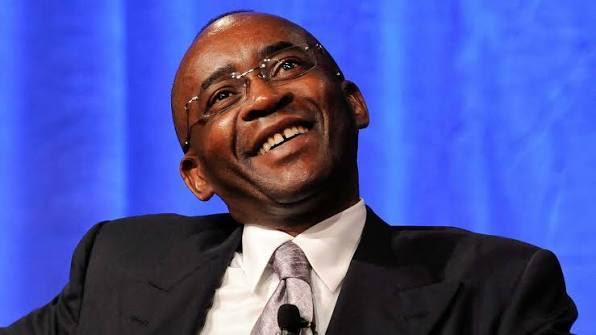
Strive Masiyiwa: The Architect of African Digital Infrastructure
When Strive Masiyiwa founded Econet Wireless in 1993, most Africans had never heard a telephone ring. Today, at 63, the Zimbabwean billionaire is building something even more ambitious: the fiber, data centres and AI infrastructure that could power Africa's digital economy for the next generation.
From his early battle against Zimbabwe's telecom monopoly to the expansion of Cassava Technologies, Masiyiwa's journey offers a different blueprint for African technology: build the infrastructure first, and let innovation follow.
Engineering Against the Odds
Masiyiwa studied electrical engineering at the University of Essex before returning to Zimbabwe with a vision of breaking the state telecom monopoly and bringing mobile connectivity to ordinary Africans. That vision triggered a five-year constitutional battle with Zimbabwe's state-run telecommunications authority. His persistence eventually helped dismantle the monopoly and opened the market to private operators.
In 1998, Econet Wireless became the first indigenous black-owned company to list on the Zimbabwe Stock Exchange.
From Telecoms to Digital Infrastructure
Today, Masiyiwa is the founder and executive chairman of Econet Global, with operations spanning 28 African countries and international markets. But the bigger transformation has been the evolution from telecoms into digital infrastructure. Through Cassava Technologies, founded in 2021, Masiyiwa has built a portfolio spanning cross-border fiber broadband, carrier-neutral data centres, cloud and cybersecurity, fintech infrastructure, and digital platforms for businesses and governments.
Cassava's strategy is increasingly vertically integrated: from the physical fiber and data centres to the cloud and AI services running on top.
The AI Pivot
In 2025, Masiyiwa unveiled plans for what he described as Africa's first AI factories — large-scale compute infrastructure designed to train and deploy AI models on African soil. The objective is straightforward: give African researchers, companies and governments access to local AI infrastructure while reducing dependence on overseas cloud providers.
It is also a direct response to one of Africa's biggest AI constraints: the compute divide. If African companies are expected to build AI, they need more than talented engineers. They need the physical infrastructure to train, deploy and scale those systems.
Infrastructure First
Masiyiwa's thesis is different from the typical startup playbook. While many founders build consumer applications or vertical solutions, he is betting on the horizontal infrastructure that everyone else depends on. The logic is simple: no reliable infrastructure means no scalable digital economy. Africa needs connectivity, data centres and affordable compute before its AI ecosystem can reach its full potential.
This is the reverse — or at least a parallel — version of Silicon Valley's development. Internet infrastructure, cloud computing and smartphones created the foundation for massive application businesses. Masiyiwa is attempting to build Africa's infrastructure while its application economy is developing.
The Hard Part
Building continental infrastructure is not straightforward. Regulatory fragmentation means every market comes with different telecom, data and AI rules. Capital intensity makes fiber networks, data centres and AI factories fundamentally different from conventional startups. And geopolitical competition is placing Africa's digital infrastructure at the centre of a wider contest between global technology powers.
Masiyiwa's model therefore requires more than capital. It requires navigating governments, markets and infrastructure constraints across an entire continent.
What Founders Can Learn
Infrastructure is a moat. Consumer applications can come and go. Companies controlling critical infrastructure can build much deeper structural advantages. Think beyond one market — Masiyiwa did not build Econet solely for Zimbabwe. The ambition was continental from the beginning.
Legal and regulatory battles can reshape markets. His fight against Zimbabwe's telecom monopoly ultimately became bigger than one company or one license. AI is becoming an infrastructure layer. Just as mobile connectivity underpinned Africa's previous technology wave, compute, data centres and cloud infrastructure could underpin the next one.
The Bottom Line
Strive Masiyiwa's story is ultimately about owning the rails on which innovation travels. Africa does not only need more startups building AI applications. It needs the fiber, data centres, cloud infrastructure and compute capacity that allow those companies to exist and scale.
That is the bet Masiyiwa is making.
Nigeria — Fintech Regulation Gets Tighter
The CBN is moving major fintechs including Moniepoint, OPay, Kuda and PalmPay toward national licensing, alongside higher capital requirements, tighter oversight and a new centralized licensing gateway. For founders, compliance is becoming a competitive advantage; for investors, licensing tier, regulatory costs and consolidation risk now belong in the diligence checklist.
Kenya — Data Protection Moves Into Enforcement
Kenya's data regulator is shifting from guidance to active enforcement, with formal audits, compensation orders and stronger scrutiny of biometric and cross-border data. With new AI governance provisions also emerging, founders handling sensitive data should treat consent, audit trails and data deletion as core infrastructure — not paperwork.
Côte d'Ivoire — Building the West African AI Infrastructure Base
Côte d'Ivoire is positioning itself as a regional leader in AI governance and digital infrastructure, backed by a reported $170M connectivity investment targeting fibre and data-centre capacity. For AI infrastructure founders and investors, the signal is clear: West Africa's next opportunity may sit as much in the infrastructure layer as in the applications built on top of it.
FirstFounders Build-to-Transfer delivers a fully operational AI company — product, embedded team, legal entity and go-to-market engine — then hands you complete ownership, with a trained team in place to run it from day one.
Book a Discovery Call →AI Infrastructure Investment Boom Is Crowding Out Africa
AI infrastructure is becoming one of the world's biggest investment themes, with capital pouring into data centres, GPU clusters and power infrastructure. Private infrastructure returns averaged 12.8% in 2025, making these assets increasingly attractive to global investors.
Africa, however, is competing for that same capital from a position of structural disadvantage. The continent has less than 1% of global data-centre capacity despite representing 18% of the world's population, while an estimated $2.5 billion is needed to unlock its AI compute potential.
For African founders, the constraint is increasingly infrastructure, not ideas. Expensive and limited GPU access makes it harder to train and iterate AI models at the speed of global competitors. Partnerships with hyperscalers, cloud providers and emerging infrastructure players may therefore become more important than building compute capacity independently.
For investors, this points to an opportunity beyond AI applications. Data centres, fibre, cloud infrastructure and compute access could become some of the most strategically valuable assets in Africa's AI economy.
The bottom line: The global AI infrastructure boom is attracting capital at a pace Africa cannot yet match. Closing the continent's compute gap will require coordinated investment from governments, development finance institutions and private capital — or Africa risks becoming a major consumer of AI without building the infrastructure to produce it.
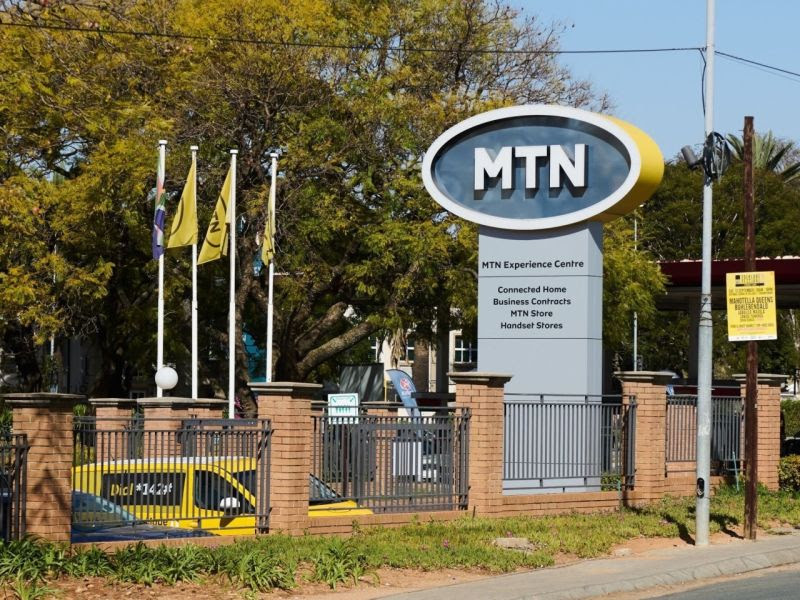
MTN Group is moving ahead with its $6.2B acquisition of IHS Towers, after shareholders approved the all-cash deal on August 5. The transaction would give MTN greater control over the infrastructure underpinning its network and represents a major step toward consolidation in Africa's telecom infrastructure market.
Elsewhere, Kenya's Cloud9 acquired social commerce platform Chpter in an all-stock transaction — its second acquisition in three months — highlighting the growing buy-and-build strategy among African fintechs. Meanwhile, IHS Towers sold its Brazilian and Colombian operations to Macquarie, streamlining its portfolio ahead of the MTN transaction and reinforcing its focus on Africa.
And in payments, Flutterwave is preparing to acquire a bank in East Africa, following a broader industry trend of fintechs using M&A to secure banking capabilities and licenses rather than building them from scratch.
The signal: African M&A is increasingly about vertical integration and strategic capability — from towers and banking licenses to commerce infrastructure. For founders, strategic acquisition is becoming a more realistic exit path; for investors, consolidation is creating new opportunities across fintech, telecoms and digital infrastructure.
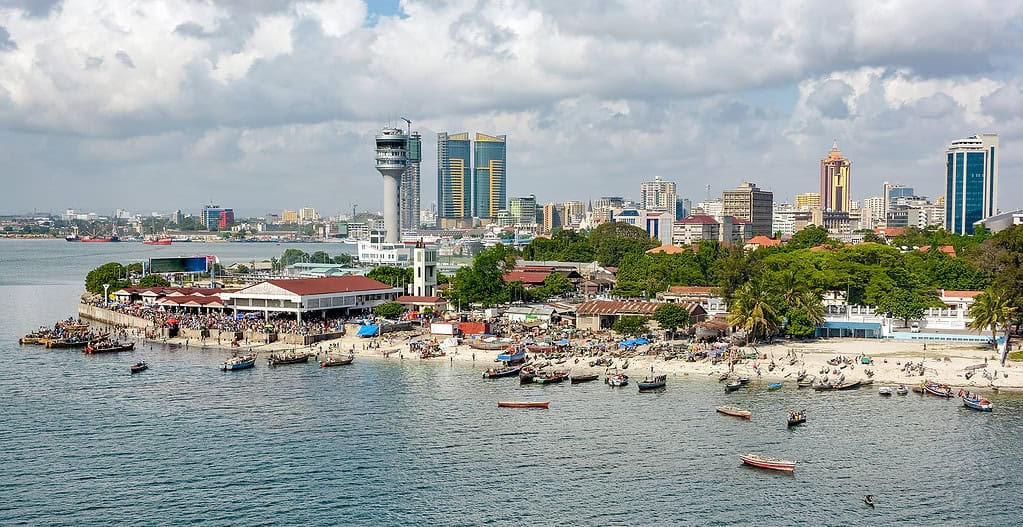
Tanzania is on track for its first $100M funding year. Startups raised $52M in H1 2026 — almost matching the country's entire 2024 total of $53M. With another $48M needed before year-end, Tanzania is emerging as a serious fifth hub alongside Nigeria, Egypt, Kenya and South Africa. For founders, the signal is clear: investor attention is expanding beyond the continent's traditional markets.
Somalia is building a more coordinated startup ecosystem. Three leading innovation hubs — iRise Hub, SIMAD iLab and HarHub — have launched a National Startup Network to standardize incubation, mentorship and funding pathways. It marks a shift from fragmented ecosystem support toward a more coordinated national platform for founders and investors.
Southern Africa's climate-tech pipeline is attracting institutional capital. Climate Fund Managers has reached a $184.6M first close for its SA-H2 Fund, targeting green-transition investments across the region. The raise strengthens the case for renewable energy, energy efficiency and sustainable infrastructure as increasingly mainstream investment opportunities.
A three-month hybrid accelerator for growth-stage, AI-driven South African startups, offering up to R1 million in equity-free funding, Google Cloud credits, AI tools and technical mentorship. Deadline: 28 August 2026.
Apply now →$20,000–$50,000 in equity funding, mentorship, and investor access for African startups building in creative tech, gaming, media, and digital content. Deadline: 28 August 2026.
Apply now →FAO and Smart Africa invite AI, IoT, and climate-tech startups tackling food security and agriculture to apply for equity-free grants, technical support, and pilot opportunities. Deadline: 31 August 2026.
Apply now →$300,000–$2.4 million in debt financing for established agribusinesses, agri-fintech companies, and supply chain operators across Sub-Saharan Africa, alongside technical assistance for growth. Deadline: 31 August 2026.
Apply now →A fully funded Africa Fellowship offering a six-month placement in Washington, D.C., or selected African offices for eligible PhD candidates and recent graduates. Deadline: 25 August 2026.
Apply now →An equity-free accelerator supporting growth-stage technology startups across MENA, including Egypt, Morocco and Tunisia, with Google Cloud credits, AI tools, technical mentorship and investor access. Deadline: 31 August 2026.
Apply now →A pan-African programme supporting early-stage startups from idea to MVP through structured training, mentorship, investor access and opportunities to pitch for funding. Applications are rolling, with the next cohort beginning in September 2026.
Apply now →That's a wrap on Issue 002 of The Ecosystem Brief.
Africa's AI ecosystem is moving from possibility to execution.
This week, we saw governments building shared AI infrastructure, global investors backing African companies, regulators tightening the rules, and founders building deeper technology around real problems. At the same time, the compute gap, access to capital and fragmented markets remain significant constraints.
For founders, building for Africa requires more than a great product — it requires infrastructure, distribution and regulatory awareness. For investors, the next generation of opportunities may sit deeper in the AI stack: infrastructure, data, vertical applications and the systems that enable them.
Thank you for reading Issue 002 of The Ecosystem Brief.
Every Tuesday, we bring you the AI news, funding, deals, policy developments, opportunities and signals shaping Africa's technology ecosystem, in one concise weekly read.
Until next Tuesday,
— The Ecosystem Brief
Never miss an issue
Join the founders, investors, and operators who start their Tuesday with The Ecosystem Brief.
Subscribe on the homepage →