Africa’s AI Story Is Bigger Than Chatbots
Welcome to Issue 012.
Another week, another round of developments shaping Africa’s AI and technology ecosystem. From new innovations and startup funding to policy shifts, strategic deals and opportunities for founders, there’s plenty happening across the continent.
As always, we’ve sifted through the noise to bring you the stories that matter, the context behind them, and the opportunities worth paying attention to.
Let’s get into this week’s Brief.

UCT Secures $1.6M for AI-Powered Precision Medicine
The University of Cape Town has secured $1.6 million from Google.org to develop AfriPGx-AI, a platform using AI to study how genetic variation among African populations affects how people metabolise medicines.
The signal: African research institutions are moving beyond adopting global AI tools to developing systems built around local data. Healthtech founders could find opportunities in partnerships with research institutions and clinical datasets.
AfDB and UNDP Advance $10B AI Initiative
The African Development Bank and UNDP are moving towards implementation of the AI 10 Billion Initiative, which aims to mobilise $10 billion for AI development across Africa, beginning with five target countries.
The signal: The focus is shifting from announcing ambitious AI investment plans to implementation. The selected countries, funding structures and projects will determine where opportunities emerge for startups and infrastructure providers.
Kenyan AI Startups Win Meta Pitchathon Funding
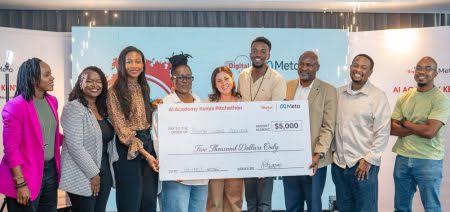
Healthcare startup Neural Labs Africa and education platform Me-Nasoma won the inaugural Meta AI Academy Kenya Pitchathon. Each received $5,000 in equity-free funding, Meta advertising credits and an opportunity to showcase their work at a global summit in Türkiye.
The signal: Competitions and ecosystem programmes are becoming potential routes to early-stage capital, distribution and international exposure for African AI startups.
Who Gets a Say in Africa’s AI Rules?
African governments are advancing AI frameworks, but questions remain about public participation and citizen protections. The African Public Interest AI Council (APiAC) will convene discussions, commission research and advise on policy, although it has no regulatory or enforcement powers. Meanwhile, Kenya’s AI Bill is at Second Reading in the Senate, and a draft national AI policy is open for public comment.
The signal: Africa’s AI governance debate is moving beyond economic competitiveness towards accountability and public interest. The rules emerging at national and continental levels will shape how companies build and deploy AI across markets.
The Signal
African AI is advancing across research, investment, startup support and governance. The next test is execution: turning funding into usable products, ensuring local research translates into solutions, and making sure the rules governing AI reflect the needs of the people who use it.
AI funding is reaching deeper into specialised sectors, from clinical diagnostics to space technology and African-language data infrastructure.
South Africa’s Healthleap raised $38 million across a Seed and Series A round, backed by Sequoia Capital, First Round Capital and Hummingbird Ventures, to expand its AI-powered clinical screening capabilities. Kenya/US-based Satlyt secured $8 million in seed funding to advance AI and data processing aboard spacecraft, while Zimbabwean-founded Ocular AI raised $2 million in pre-seed funding for voice AI and multimodal dataset infrastructure.
Meanwhile, Digital Africa made its first investment in Ethiopia through agritech startup ChipChip, extending development-finance-backed investment into another African market.
The signal: Investors are backing increasingly specialised AI applications, from healthcare to orbital computing. ChipChip’s investment also highlights the widening geography of African startup funding beyond the continent’s established tech hubs.

African M&A activity continues to span fintech, energy, telecoms and industrial manufacturing. The continent recorded 25 startup exits in H1 2026, while major transactions and strategic partnerships point to growing consolidation and cross-border expansion.
LekkeSlaap, South Africa’s accommodation booking platform, was acquired by a local investor consortium led by Bellair Road Investment Partners and Janic Capital, alongside family offices and Investec. Its co-founders exited, highlighting the growing role of domestic investors in providing liquidity to startup founders.
In Angola, Etu Energias is preparing to acquire stakes in oil Blocks 14 and 14K from Azule Energy and Chevron, with Chariot as a partner. The transactions also expose a financing gap, with local banks providing less than 10% of funding for recent upstream deals.
On the strategic partnership front, Telecel Group and Huawei signed a $200 million agreement to expand mobile broadband and digital infrastructure, with Ghana a key focus. Mastercard and Moovn Technologies also signed a five-year deal to expand digital payments across East Africa, including cross-border transfers and digital wallets. Meanwhile, South Africa’s Malben Engineering and Egypt’s El Araby Group agreed to establish a joint manufacturing platform serving markets across Africa.
The signal: African deals are increasingly about strategic capabilities, infrastructure and regional reach. Local capital is creating new exit routes, but the limited participation of African banks in large transactions remains a constraint on the continent’s ability to finance its own consolidation.
Halcyon is inviting early-stage, impact-driven ventures across Sub-Saharan Africa working on agriculture and food security. Selected ventures receive a $10,000 equity-free stipend, $10,000 in AWS credits, expert guidance and access to a hybrid programme with residencies in Accra and Nairobi. Applicants should have a working product and evidence of customer traction, such as revenue or paid pilots.
Apply now →Building a platform that helps people find work, earn income or grow a business in Mombasa? Jobtech Alliance is inviting founders to join its local ecosystem. Selected platforms that fit its investment thesis may access up to $20,000 and technical support, alongside a network of more than 600 founders across Africa. No application fee or equity is required. Eligibility: startups already operating in Mombasa or serious about expanding there before July 2027.
Apply now →This pan-African programme supports women founders aged 18–35 building tech-enabled businesses. Applicants need an MVP in market and at least $500 in monthly revenue sustained for six months. The programme offers 12 weeks of training, a monthly stipend, six months of mentorship and an opportunity to pitch for $5,000 in startup capital after completing the programme.
Apply now →The World Innovation Summit for Education is seeking for-profit edtech startups from around the world, including Africa, that have moved beyond the MVP stage and demonstrated traction. Selected ventures receive $50,000 worth of support, including expert mentorship, investor connections, business development guidance and international visibility. Solutions may target K–12 education, higher education or professional development.
Apply now →The Last Word
This week’s developments show Africa’s technology ecosystem continuing to evolve, from AI research built around African populations to new capital for specialised startups and strategic deals across fintech, telecoms and infrastructure. The opportunity is growing, but so is the importance of building solutions that address local needs and create lasting value.
As we continue building The Ecosystem Brief, we want to make sure it stays relevant and useful to you. What are we getting right? What could we improve? And what would you like to see more of in future editions?
We’d appreciate a couple of minutes of your time to share your thoughts. Your feedback will help us decide what to keep, what to change, and where to focus next.
Thank you for reading and for being part of The Ecosystem Brief. We’ll be back next week with more of the stories, insights and opportunities shaping Africa’s technology ecosystem.
Until next Tuesday,
— The Ecosystem Brief
Everything that matters. Nothing that doesn’t.
Never miss an issue
Join the founders, investors, and operators who start their Tuesday with The Ecosystem Brief.
Subscribe on the homepage →